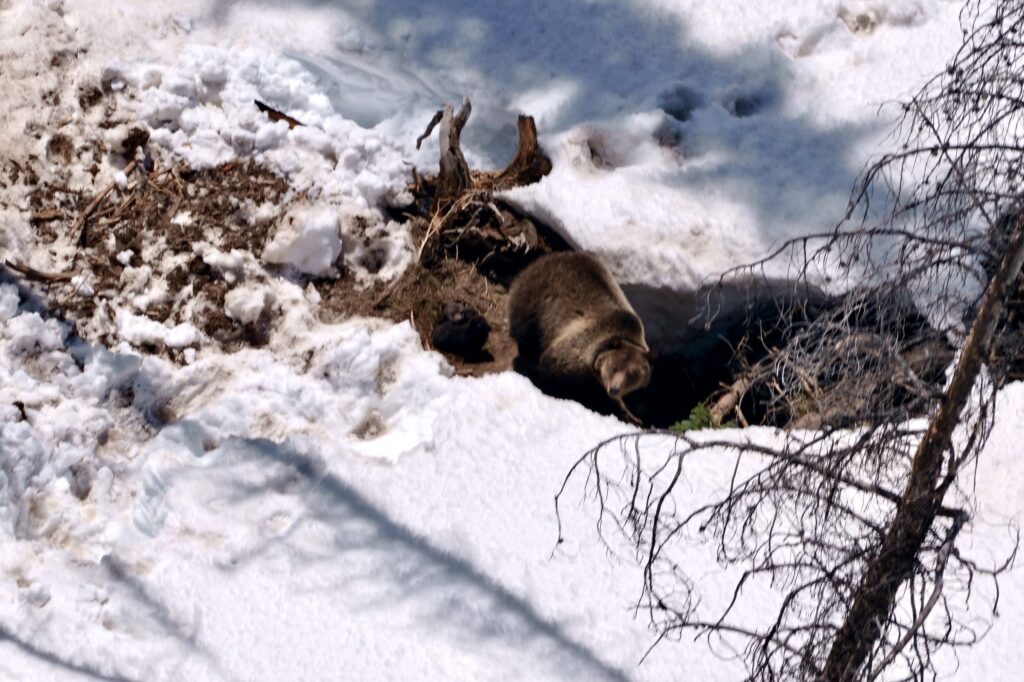
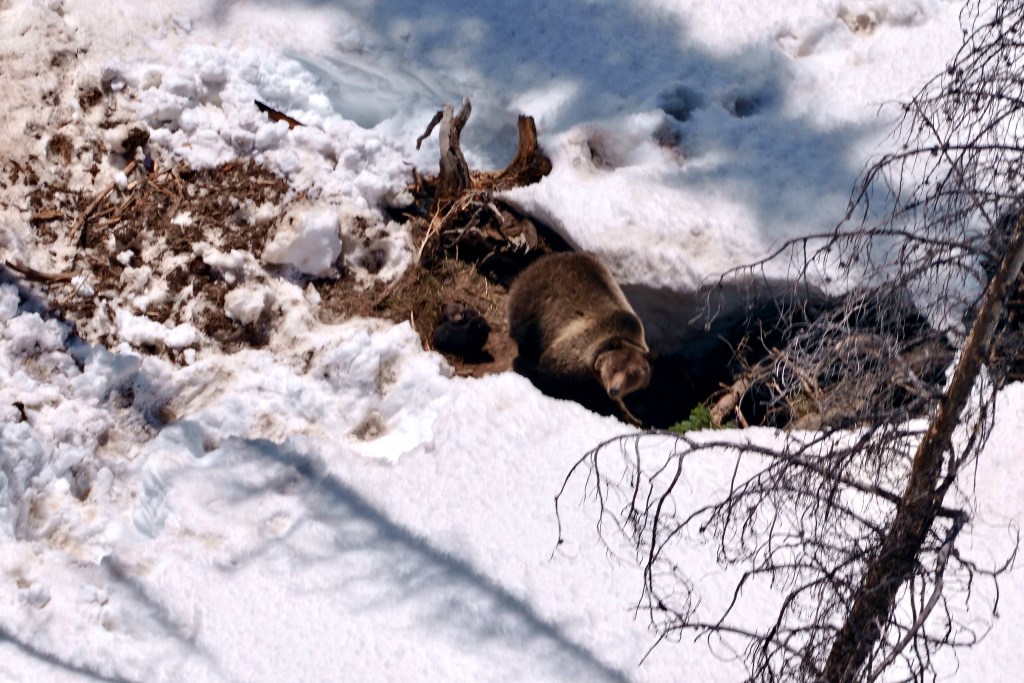
The grizzly bear population in Greater Yellowstone has increased by at least two this spring. Although annual counts are routine, the recent capture of a photo showing Grizzly 1126F with two cubs at the Teton Wilderness den was an unexpected scientific bonus. “She’s clearly in great shape, for a young mother coming out of the den,” said Quentin Kujala of Montana Fish, Wildlife and Parks.
Grizzly 1126F represents an important genetic link between the isolated Greater Yellowstone and Northern Continental Divide ecosystems, separated by around 35 miles. Lack of genetic interchange between these bear populations has been a significant conservation issue. The sow was relocated from Montana to Yellowstone in 2024 to increase genetic diversity.
This genetic isolation was crucial in the continued listing of Yellowstone grizzlies under the Endangered Species Act. The 2018 court ruling emphasized that low genetic diversity posed inbreeding risks. Montana and Wyoming wildlife agencies responded by facilitating bear translocations between ecosystems.
The Trump administration has slated 2026 as the year to delist grizzlies, contingent on resolving major issues like genetic diversity and regulatory mechanisms. Recent court rulings demand further research on factors such as logging road impacts on bear habitats before delisting.
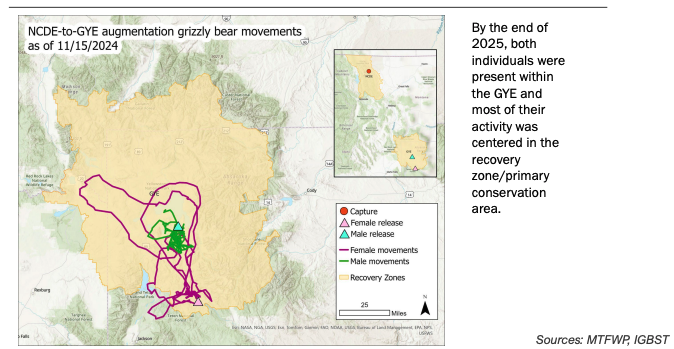
Concerns also revolve around state regulatory readiness if bears lose federal protection. State-level tools are being developed, although budget issues have delayed the Interagency Grizzly Bear Committee’s meetings.
The Trump administration seeks to diminish ESA’s power and alter grizzly bear protection but missed a January deadline for a final rule.
Yellowstone spotted its first 2026 grizzly on March 9, later than usual due to an early January sighting during a mild winter. Wildlife managers are keen on upcoming meetings, with key mortality and range expansion reports due.
The Northern Continental Divide Ecosystem’s range is expanding, now covering about 1.5 million acres with over 1,000 bears. In contrast, the Greater Yellowstone Ecosystem maintains a stable range of 1.7 million acres with about 1,050 grizzlies.
Efforts focus on ensuring continued bear monitoring, addressing conflicts, and maintaining population levels to prevent future ESA relisting. Community involvement through “Bear Smart” programs helps mitigate conflicts.
State-managed hunting seasons might emerge post-delisting, depending on public opinion favoring sustainable hunting options. Biologists continue tracking grizzly genetics to assess reproductive success and survival rates.
—
Read More Montana News

![Jody White’s Unconventional Michigan Supreme Court Candidacy Explored[embed]https://www.youtube.com/watch?v=8NfxFIPE4ac[/embed]](https://www.kitchentablenews.org/wp-content/uploads/2026/10/Jody-Whites-Unconventional-Michigan-Supreme-Court-Candidacy-Exploredembedhttpswwwyoutubecomwatchv8NfxFIPE4acembed.com2F842F0e2Fc7223daa43c9876b36a4e00773a42Fme-supc.png "Jody White’s Unconventional Michigan Supreme Court Candidacy Explored[embed]https://www.youtube.com/watch?v=8NfxFIPE4ac[/embed]")