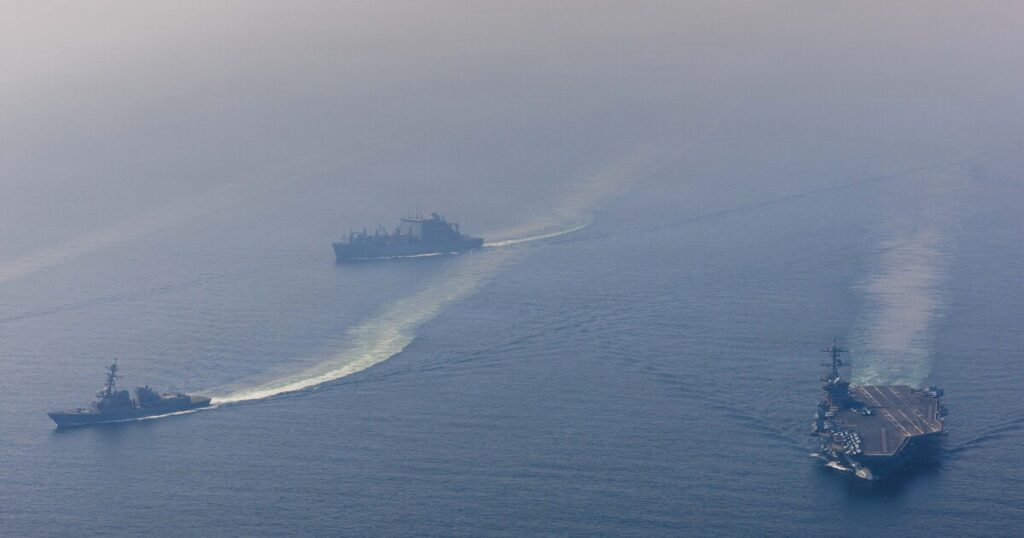
The strategic importance of the Strait of Hormuz has once again come into sharp focus as the U.S. Navy launches a blockade in an attempt to curb Iran’s oil trade. This bold maneuver raises questions about the feasibility and potential outcomes of such an expansive naval operation.
The U.S. administration aims to cut off Iran’s oil export lifeline by severing its maritime trade connections, hoping to leverage economic pressure after military strikes failed to yield desired results. CENTCOM has outlined plans to intercept vessels heading to or from Iranian ports, ensuring freedom of navigation for other Gulf destinations as reported in a statement last Sunday.
President Trump’s strategy of halting shipping traffic to and from Iran is intended to cripple its oil-dependent economy. While the administration terms this approach a blockade, Bryan Clark of the Hudson Institute suggests it’s more accurately a naval quarantine, targeting only Iranian-origin traffic.
According to Eric Schuck, an economics expert at Linfield University, this approach is akin to traditional economic warfare, which seeks to disrupt an adversary’s economy by targeting irreplaceable resources. In Iran’s case, that critical resource is oil.
However, history presents several lessons on the complexities and challenges of naval blockades.
Blockades Demand Resources and Present Enforcement Challenges
Historically, naval blockades have relied on strategic patrols and control of crucial maritime routes. For instance, during the Napoleonic Wars, the British blockade of French ports required substantial naval resources, yet some French ships still managed to evade capture.
Today’s U.S. Navy possesses advanced technology such as satellites and drones, which enhance vessel detection capabilities in the Strait of Hormuz, as Steve Dunn, author of Blockade: Cruiser Warfare and the Starvation of Germany in World War One, points out. Despite these advancements, enforcing a blockade remains resource-intensive, potentially requiring multiple destroyers to manage the bustling maritime traffic.
Drawing parallels with recent events, the initial phase of the Ukraine conflict saw Russia attempting to restrict Ukrainian exports via the Black Sea. This effort quickly faltered due to insufficient military capacity, as explained by Nicholas Mulder, a Cornell University professor specializing in economic warfare.
Effectiveness of Blockades Varies
Schuck notes contrasting outcomes from World War II blockades: the German U-boat campaign against Britain failed to disrupt critical supply lines, whereas the U.S. effectively used submarines to isolate Japan from vital resources, leading to significant economic strain.
Unintended Consequences Often Emerge
Naval blockades frequently yield unforeseen results. In World War I, the Allied blockade against Germany inadvertently caused agricultural collapse by restricting chemicals crucial for fertilizer production, leading to civilian hardship.
Schuck warns that Iran’s reliance on oil revenue means its food supply could be jeopardized if the blockade is prolonged or highly effective, echoing historical precedents of economic disruption.
—
Read More Michigan News