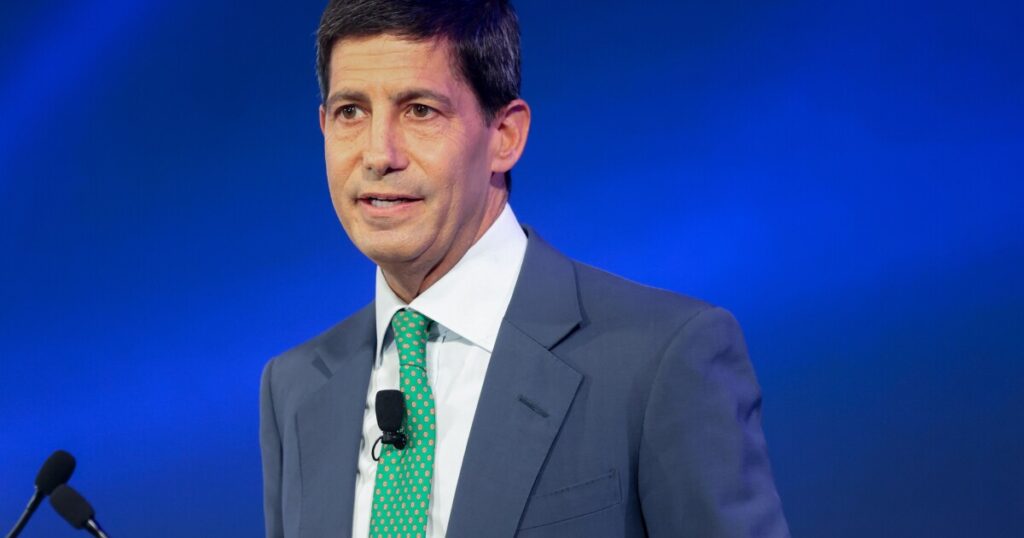
The nomination of Kevin Warsh as the next chair of the Federal Reserve under President Trump is surrounded by controversy, primarily due to issues beyond his direct influence. With his confirmation hearing underway, Warsh faces challenges influenced by broader political dynamics and ongoing investigations.
The Senate Banking Committee recently conducted a confirmation hearing for Warsh, yet his path to confirmation is complicated by external factors. Notably, one Republican senator has indicated a willingness to obstruct the process until the Department of Justice halts its investigation into the Federal Reserve.
External Factors Influencing the Confirmation
Senator Thom Tillis, a significant figure on the banking committee, has expressed his intention to delay Warsh’s confirmation. However, his decision is not rooted in opposition to Warsh himself. Tillis is demanding the Justice Department cease its criminal investigation concerning the central bank and its current chairman, Jerome Powell. The investigation centers on alleged cost overruns in the Fed’s headquarters renovation project. Yet, Powell argues this is part of a broader pressure campaign by the Trump administration to influence interest rate decisions. A federal judge has labeled the investigation an unwarranted intimidation tactic, but the DOJ plans to appeal the ruling.
“If we put everybody in prison in federal government that had had a budget go over, we’d have to reserve an area roughly the size of Texas for a penal colony,” Tillis remarked.
Warsh’s Stance on Interest Rates
Kevin Warsh, who previously served on the Fed’s board, was known for a cautious approach regarding interest rate cuts, traditionally wary of triggering inflation. However, he now believes technological advancements such as artificial intelligence could permit lower interest rates without spurring inflation. “I think the economy’s potential is growing quite quickly,” Warsh mentioned during the hearing.
Critics, including Senator Elizabeth Warren, suggest Warsh might align too closely with President Trump’s agenda, potentially compromising the Fed’s independence. Warren argues, “Trump’s economic failures are causing him political problems and he wants the Fed to use monetary policies to artificially juice the economy.”
Despite Warsh’s willingness to lower interest rates, the decision lies with the 12-member committee at the Fed, many of whom are hesitant to cut rates until inflation aligns with the 2% target. The ongoing conflict with Iran and the subsequent rise in gasoline prices further complicate this objective.
Proposed Changes at the Federal Reserve
Upon confirmation, Warsh could advocate for a reduced role of the Fed in the economy. He has criticized the central bank for extending beyond its primary objectives and suggested that it should limit its involvement in broader political issues, including climate change and inclusion. Warsh has emphasized that while political leaders should refrain from interfering with interest rate decisions, the Fed should also avoid engaging in politically charged issues.
Copyright 2026 NPR
—
Read More Michigan News