With rising wealth inequality and budget pressures, states like Maine are introducing millionaire taxes to address these issues. Maine state Rep. Cheryl Golek describes the new tax as a fair measure, noting that middle-class families often pay higher effective tax rates than the wealthy. This new legislation, signed by Gov. Janet Mills, imposes a 2% tax on households earning over $1 million annually.
Democratic-led states, including Maine and Washington, are following the trend set by New Jersey and Massachusetts in implementing taxes targeting high earners. As wealth disparity grows, more states, such as Illinois and Minnesota, are proposing new taxes on the affluent. This move is seen as a way to balance tax structures skewed against lower earners.
Opponents argue that these taxes may drive wealthy residents and businesses away, especially as some states reduce taxes. Patrick Woodcock, president of the Maine State Chamber of Commerce, expressed concerns about disincentives for residents. The push for taxing the rich contrasts with some red states adopting regressive tax systems impacting lower earners more heavily.
Jared Walczak from the Tax Foundation highlights the trend of wealthy individuals relocating to low-tax states. He emphasizes that while some places can maintain high taxes, there are limits to taxpayer tolerance. Proponents, however, argue that these taxes support essential services, as seen in Massachusetts, where a new surtax raised billions for education and transportation.
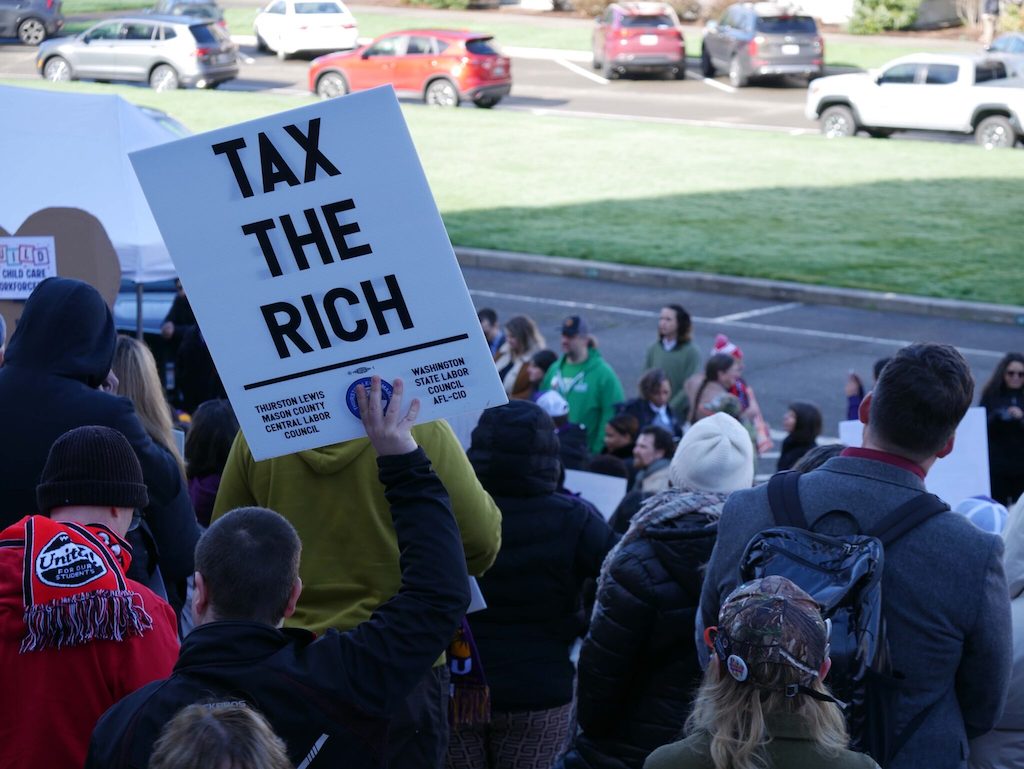
Amber Wallin of the State Revenue Alliance stresses the need for progressive taxes due to federal policy changes that cut safety net programs. Meanwhile, the debate continues with multiyear efforts to raise taxes on the rich, despite significant opposition and legal challenges, as seen with Washington’s new tax law.
Rising wealth inequality
The gap between rich and poor has expanded, with the top 0.1% of Americans seeing a $40 million wealth increase each, while the poorest households’ wealth remains stagnant. The share of national income for the top 1% doubled between 1980 and 2022, while the bottom 50%’s share fell by a third, according to Oxfam America.
Federal cuts have intensified the need for state-level progressive tax changes. President Trump’s tax bill reduced funding for programs like food stamps, favoring the wealthy with tax cuts. The Massachusetts Fair Share Amendment, approved in 2022, now funds education and transportation with a 4% surtax on incomes over $1 million.
Critics, like Jim Stergios from the Pioneer Institute, argue that such taxes could drive residents away, citing Massachusetts’ population loss to other states. However, supporters like Phineas Baxandall of the Massachusetts Budget and Policy Center point to the benefits of new revenue funding key services.
Multiyear efforts
Despite growing interest, increasing taxes on the wealthy faces skepticism and requires extensive organization. Michigan recently suspended a campaign for a millionaire tax, while Illinois dropped a similar proposal due to insufficient legislative support. The Washington tax faces legal challenges, with opponents citing constitutional concerns.
Democratic state Sen. Noel Frame argues that the Washington tax aligns with progressive state values, addressing regressive tax codes that burden lower earners. The movement to tax the rich is spreading, with some conservative states rejecting federal tax changes benefiting the wealthy.
Frame believes public demand for fair tax policy will continue to grow as awareness of its link to wealth inequality rises.
—
Read More Montana News