Updated May 7, 2026 at 4:35 PM EDT
MADRID — A global alert has been issued as health organizations on four continents intensify efforts to track and monitor passengers from a cruise ship affected by a hantavirus outbreak. The outbreak became apparent only after the ship had docked and passengers had disembarked.
In Argentina, the Health Ministry suspects that the virus originated in a southern town, possibly contracted by a Dutch couple who had been on a bird-watching trip before boarding the vessel, according to The Associated Press.
The cruise ship saw its first passenger death on April 11, yet it wasn’t until April 24 that over two dozen passengers from at least 12 countries left the ship without undergoing contact tracing, as confirmed by the ship’s operator and Dutch authorities.
The outbreak has resulted in three deaths — a Dutch couple and a German national — while several others show symptoms. The hantavirus symptoms can take between one to eight weeks to manifest.
Currently, none of the remaining passengers or crew display symptoms, according to Oceanwide Expeditions, the Netherlands-based cruise operator.
The World Health Organization (WHO) has assessed the risk to the general public as low, noting that hantavirus primarily spreads through the inhalation of contaminated rodent droppings and is not easily transmitted between humans.
“We believe this will be a limited outbreak if the public health measures are implemented and solidarity is shown across all countries,” said Dr. Abdirahman Mahamud, the WHO’s alert and response director on Thursday.
1st hantavirus case on board was confirmed May 2
As the ship journeyed near Cape Verde, three people, including the ship’s doctor, were evacuated to specialized European hospitals on Wednesday. The first death on board, a Dutch man, occurred on April 11, and his body was removed at St. Helena on April 24. His wife disembarked and later passed away in South Africa.
On April 24, a total of 30 passengers, including the deceased Dutch couple, left the ship at St. Helena, according to the ship’s operator. However, the Dutch Foreign Ministry estimates this number to be closer to 40. Confirmation of the hantavirus came on May 2, when a British passenger was diagnosed in South Africa.
Passengers who disembarked April 24 are being monitored
On Wednesday, it was revealed that a man tested positive for hantavirus in Switzerland after leaving the ship at St. Helena. Singaporean authorities are monitoring two men who traveled from St. Helena to South Africa and then home, now in isolation and undergoing tests.
St. Helena authorities are also isolating “higher risk contacts” for 45 days. Meanwhile, a flight attendant in Amsterdam is being tested for hantavirus after briefly interacting with an infected cruise passenger in South Africa.
South Africa is tracing contacts from an April 25 flight
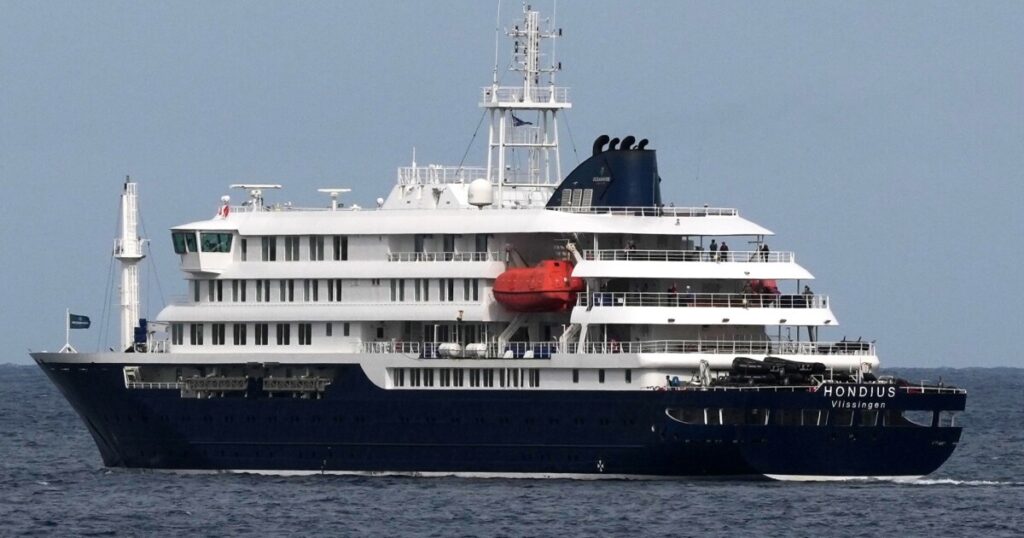
The possibility of the first infection outside the MV Hondius looms if the Dutch flight attendant tests positive. Meanwhile, the ship is en route to Spain’s Canary Islands with over 140 people still aboard, anticipated to arrive this weekend.
Contact tracing efforts in South Africa are concentrating on an April 25 flight from St. Helena to Johannesburg. A French citizen identified as a contact case is in isolation with benign symptoms. The flight also carried the Dutch woman who later succumbed to the virus in South Africa.

Should the flight attendant be confirmed with hantavirus, it could mark the first case contracted off the ship. The vessel is headed to the Canary Islands, with anticipated arrival during the weekend. WHO Director-General Tedros Adhanom Ghebreyesus remarked on improved morale aboard the ship as it commenced its journey.
South African health officials are also tracing contacts from passengers who disembarked earlier, focusing on the flight from St. Helena to Johannesburg, which carried the Dutch woman who later died. A French citizen linked to this flight is in isolation, displaying mild symptoms.
The German woman who died on May 2 remains aboard the ship, pending repatriation.
Unlike other hantaviruses, Andes virus may spread between people
Testing has confirmed that at least five individuals from the ship contracted the Andes virus, which is unique among hantaviruses for its potential to spread human-to-human, leading to severe respiratory illness.
Given the ship’s departure from Argentina, investigations are homing in on the source within the country. The Dutch couple who were the first known cases had traveled through Argentina, Chile, and Uruguay, visiting areas inhabited by the virus-carrying rodent species.
Argentina’s Health Ministry is concentrating its investigation on Ushuaia, with plans to send a team from the Malbrán Institute to examine local rodents for the virus. The WHO is coordinating with Argentine authorities, facilitating the dispatch of diagnostic kits to laboratories across five countries.
Last year, Argentina recorded 28 hantavirus-related deaths, a significant increase from the annual average of 15 over the previous five years, with nearly a third of cases proving fatal.
Copyright 2026 NPR
—
Read More Michigan News