Prospective college students might soon face new hurdles in accessing federal student loans, as a nearly-finalized rule threatens funding for certain academic programs.
The proposed regulation mandates that undergraduate programs could lose access to Federal Direct Loans if their graduates, four years after graduation, earn less than the average high school graduate in their state. Graduate programs must demonstrate earnings exceeding those of typical holders of undergraduate degrees in the same state to pass the test.
Preliminary data has identified 16 programs in Michigan that may not meet these standards, although over 1,400 programs have passed, with many others yet to be evaluated.
Ryan Fewins-Bliss, executive director of Michigan College Access Network, commented, “Functionally, they’re trying to make sure that the degree that you’re paying for and they’re using student loans and federal and state aid to pay for it is actually valuable to you in the long run.”
“Making it so that students in the arts and humanities are possibly not able to be eligible for loans, really is setting up a larger class divide… it makes it so that those people who want to study the arts and humanities have to come from means.”
— Michael Barnes, Chair of Wayne State University’s Department of Theatre and Dance
Fewins-Bliss expressed concerns that these changes could dissuade students from pursuing higher education, despite research indicating the long-term financial benefits of a college degree. “Every bit of data, every bit of research says that college will pay off,” he stated. “College is the best way to get into the middle class, the best way to build wealth and assets, to protect yourself, your family, and build your community.”
The rule is set to be finalized after reviewing feedback collected until May 20, with the stipulation that programs failing the earnings test for two consecutive years within a three-year review period, starting July 1, would lose loan eligibility.
Potential Impact on Michigan Programs
A federal dataset released during the public comment phase includes average outcomes for programs across the nation. In Michigan, several programs, especially in the arts, counseling, and social sciences, have been flagged.
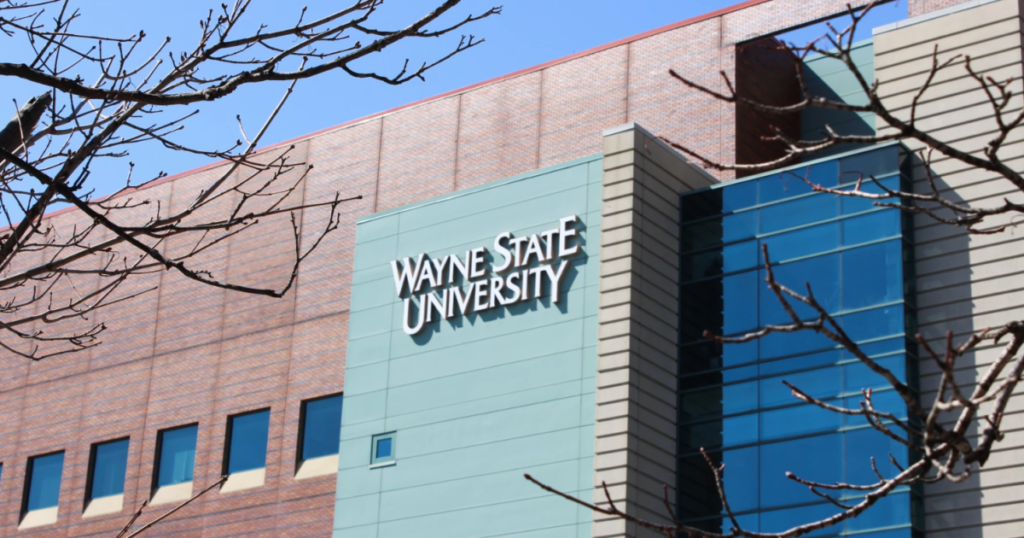
- Bachelor’s in drama/theatre arts and stagecraft at Wayne State University
- Bachelor’s in general social sciences at the University of Michigan-Dearborn
- Bachelor’s in rhetoric and composition/writing studies at Calvin University
Community colleges might also be affected:
- Associate’s degree in graphic communications at Kalamazoo Valley Community College
- Associate’s degree in fine and studio arts at Delta College
- Associate’s degree in human development, family studies, and related services at Delta College
- Associate’s degree in health and medical administration at Delta College
- Associate’s degree in design and applied arts at Henry Ford College
Master’s programs nationwide, particularly in the arts, face significant risk, with a New York Times analysis suggesting nearly half of visual arts, music, and performance programs may fail the earnings test.
Programs in Michigan identified in the government’s preliminary data include:
- Master’s in fine and studio arts from Cranbrook Academy of Art
- Master’s in historic preservation and conservation from Eastern Michigan University
- Master’s in dietetics and clinical nutrition services from Eastern Michigan University and Andrews University
- Master’s in music from University of Michigan-Ann Arbor and Western Michigan University
- Master’s in clinical counseling and applied psychology from Michigan School of Psychology
- Graduate certificate in human resources management and services from Davenport University
The loss of federal loan access could be devastating for many programs, according to Fewins-Bliss. “Eventually, if the federal government rules that a program can’t take student loan dollars, it will functionally shut down,” he explained. “We just don’t have the infrastructure, the financial wherewithal to hold those programs up. So those institutions are going to be doing everything they can to make sure those degrees are valuable.”
Arts Education and Economic Realities
Michael Barnes, chair of Wayne State University’s theatre and dance department, argues that the skills gained in arts programs go beyond monetary value. “Do we want to see them perform? Absolutely. But we recognize that the skills that they get in theater and dance, in collaborative skills, in imaginative skills and creative solving of problems, those are things that go into any degree. Whether I have a student that ends up going to law school or on Broadway, we still offered them something,” he said.
Barnes believes that judging success purely on earnings is flawed. “Judging students’ success solely by monetary income I think is such a horrible way to look at things,” he stated. “It could be that they go out into the world and they connect with their community and build their community up versus making $500,000 a year.”
He also fears that restricting federal aid for arts programs could widen the class divide. “If we are only having people who come from the upper middle class or higher studying the arts, then we’re not really going to create great artists,” Barnes said.
Michigan Educational Leaders on Loan Policy
Leaders from Michigan’s public and private non-profit colleges and universities express concern over the broad implications of these loan rule changes. Colby Cesaro, vice-president of Michigan Independent Colleges and Universities, notes that master’s degrees in teaching might fail the earnings test in states with lower teacher salaries, urging Michigan institutions to remain vigilant.
“Lots of teachers need to have a master’s degree now,” Cesaro said. “But, if you’re teaching kindergarten in a low-income school district you’re not in it because you’re making lots of money … That’s another area where the alignment we have in our minds of ‘the more education you have, the more money you make,’ doesn’t always work exactly that way.”
Mia Murphy, chief policy officer at the Michigan Association of State Universities, questioned the logic of linking student loans to market outcomes. She stated, “What do we do with a market failure? What do we do when some areas are associated with low salaries, but they’re also vital for daily life?”
—
Read More Michigan News