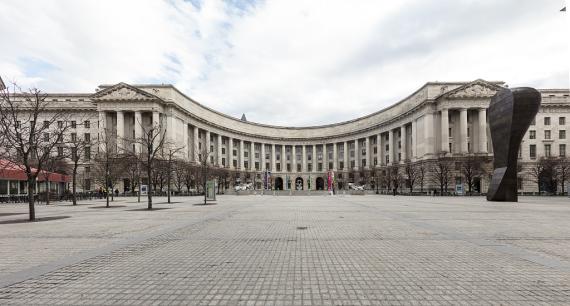

The William J. Clinton Federal Building, home of the U.S. Environmental Protection Agency in Washington, DC. (GSA photo)
Pondera County and multiple advocacy groups have filed a federal court petition against the Environmental Protection Agency (EPA) to halt wastewater discharge into a vital aquifer. Montana Renewables, a biofuels company, plans to utilize old oil wells near Valier for wastewater disposal, impacting the Madison aquifer, a crucial water source spanning eight US states and Canadian provinces. The EPA’s permit allows for over 300 million gallons per well, with Montana Renewables estimating a need to dispose of 230,000 gallons daily.
Concerns are mounting over potential health risks from the wastewater, which reportedly stems from cleaning agricultural feedstocks like canola and corn oil. Despite claims of it being “non-hazardous wash water,” it is too contaminated for treatment by the City of Great Falls, as stated by the Northern Plains Resource Council. Montana Renewables, clarifying their stance, emphasized having all necessary permits to handle non-hazardous water.
Local politicians and environmental advocates are worried about the long-term environmental impact, especially given the area’s persistent drought. The petition against the EPA’s permit was filed in the Ninth Circuit United States Court of Appeals, challenging the aquifer exemption granted in May. Montalban Oil and Gas, the well owner, holds the contested permit.
Commissioners from Pondera County, frustrated by the two-year negotiation process, have sought clarity and cooperation from Montana Renewables and the state government. The absence of hydrological studies and road usage agreements adds to their concerns, as increased traffic could damage infrastructure.
Montana Renewables has committed to a wastewater treatment plant capable of processing up to 300,000 gallons daily. However, local residents and environmentalists question why this facility hasn’t been constructed. Meanwhile, wastewater is reportedly transported to other states for disposal.
The Blackfeet Nation has also voiced concerns, urging the EPA to ensure no contamination of underground drinking water. They requested detailed information about the wells’ history and waste logs during public comments.
EPA models suggest the wastewater moves slowly, minimizing immediate risks, but the Madison Aquifer Coalition and local agricultural users remain skeptical. They argue that the aquifer’s water could benefit irrigation, highlighting the potential loss if it becomes contaminated. Despite this, the EPA maintains that the aquifer is unsuitable for drinking water and emphasizes protective measures in the permit to prevent contamination.
—
Read More Montana News

![Jody White’s Unconventional Michigan Supreme Court Candidacy Explored[embed]https://www.youtube.com/watch?v=8NfxFIPE4ac[/embed]](https://www.kitchentablenews.org/wp-content/uploads/2026/10/Jody-Whites-Unconventional-Michigan-Supreme-Court-Candidacy-Exploredembedhttpswwwyoutubecomwatchv8NfxFIPE4acembed.com2F842F0e2Fc7223daa43c9876b36a4e00773a42Fme-supc.png "Jody White’s Unconventional Michigan Supreme Court Candidacy Explored[embed]https://www.youtube.com/watch?v=8NfxFIPE4ac[/embed]")