Michigan Nursing Home Operator Faces Legal Action Over Staffing Concerns
In a groundbreaking legal move, Michigan’s Attorney General is targeting a nursing home operator for alleged Medicaid fraud linked to inadequate staffing levels. The lawsuit, invoking a state law typically used against Medicaid fraud, seeks to address staffing deficiencies that have reportedly persisted for several years.
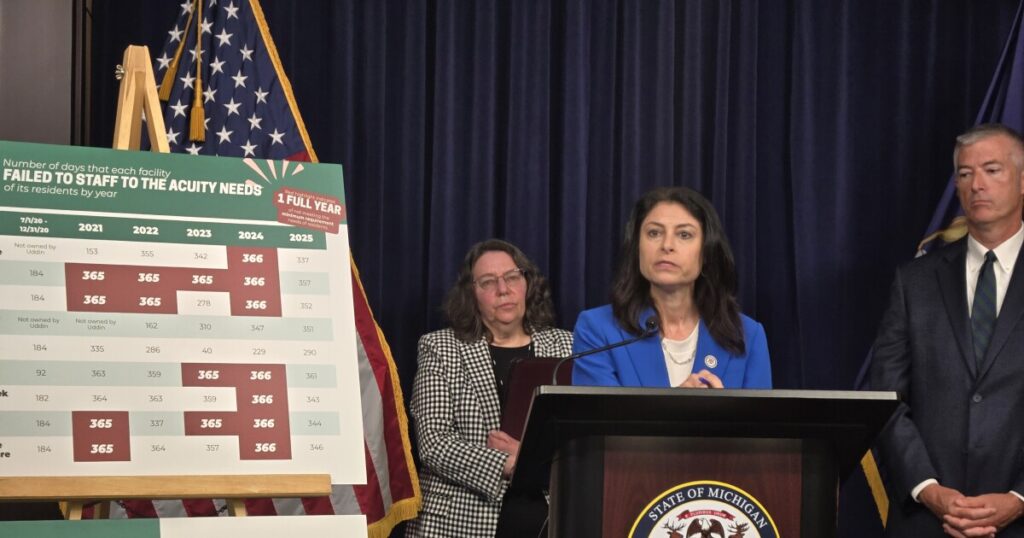
The complaint alleges that Pioneer Health Care Management Inc., which operates nine facilities in southeast Michigan, consistently failed to meet the required caregiver-to-patient ratios from July 2020 through the end of 2025. During this period, the facilities reportedly did not meet staffing requirements 96% of the time.
Michigan Attorney General Dana Nessel stated that despite these shortcomings, the company submitted Medicaid reimbursement forms falsely claiming compliance with staffing obligations. “When they say, ‘Yes, we have adequate staffing. Yes, we can manage the needs of an additional resident, or two, or three, or five, or how many,’ that is the underlying fraud,” Nessel explained during a press conference in Lansing.
This legal strategy marks a novel use of the Michigan Medicaid False Claim Act to hold healthcare operators accountable, as Nessel’s office lacks the power to close facilities, a power held by the Michigan Department of Licensing and Regulatory Affairs (LARA). LARA has previously cited these facilities for other issues, including unauthorized medication use and failure to monitor side effects adequately.
David Tanay, leading the Health Care Fraud division in the Attorney General’s Office, indicated that while individual employees have faced consequences in the past, this approach aims to effect systemic change by holding ownership and management responsible for staffing conditions.
Alison Hirschel from the Michigan Elder Justice Initiative highlighted the complexity of the issue. She noted that while staffing shortages are genuine, financial practices within some nursing homes, such as “related-party” transactions, complicate oversight. “When nursing homes assert that they don’t receive enough money in reimbursement to do better, we don’t know if that’s because they really don’t receive enough money in total public funds or that they simply skim so much off in profits that there isn’t enough left over to care for residents,” Hirschel remarked.
The state is pursuing financial recovery tied to the alleged wrongful earnings of the company, alongside fines ranging from $5,000 to $10,000 for each false reimbursement claim during the period under scrutiny.
Efforts to obtain comments from the defendants were unsuccessful as of Thursday afternoon.
—
Read More Michigan News