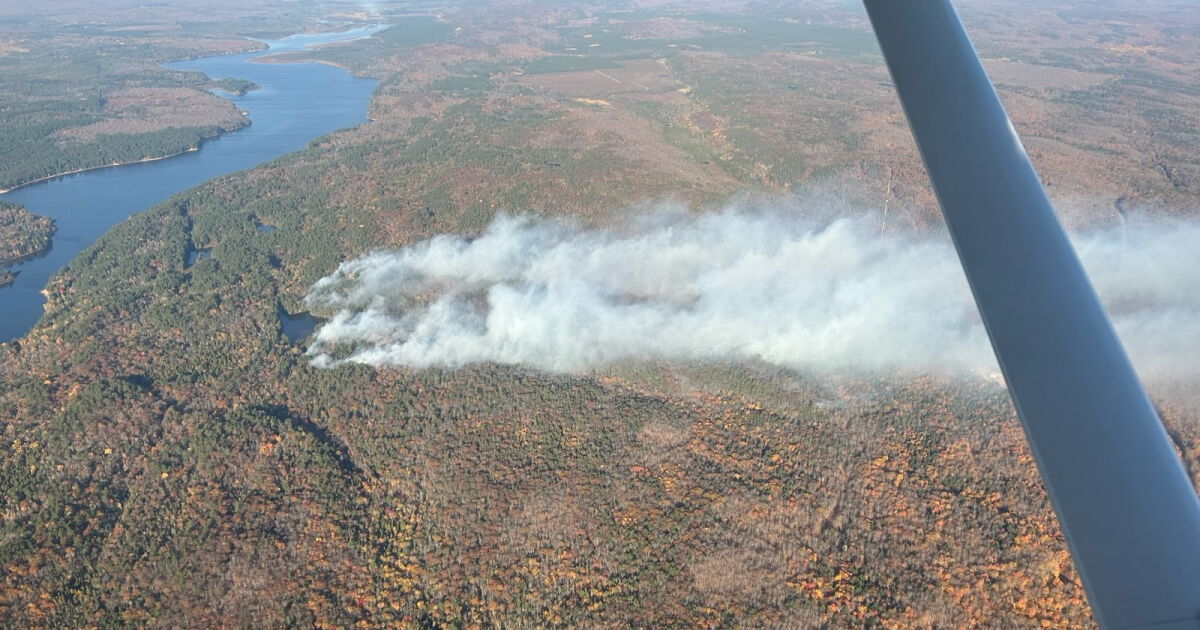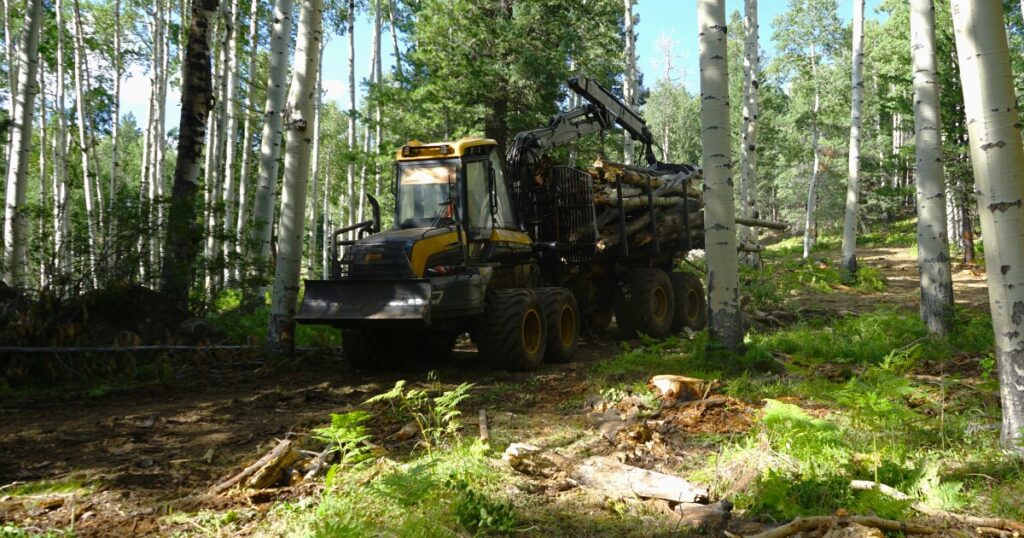
Efforts to prevent a potential large-scale wildfire are underway on the San Francisco Peaks, located north of Flagstaff, as forest crews work diligently to thin out more than 600 acres.
Around Snowbowl Road, advanced machinery stacks logs efficiently, a sight observed by James Perkins from Perkins Natural Resources, the project’s contractor. His grandson skillfully operates the equipment.
“There’s a lot of different kinds of trees: doug fir, aspen, spruce. So this is specialized logging here, this is not your typical timber sale. This is hard-to-do logging up here that we’re taking on,” Perkins explains, highlighting the uniqueness of the terrain compared to standard ponderosa thinning projects.
Jay Smith, Coconino County’s Forest Restoration Director, explains that the removal of dead-and-down logs, coupled with thinning, is crucial to mitigating the impact of potential fires.
“It’s not if this burns, it’s when this burns and we want to be ahead of that. And we’ve done it about as fast as we can and I’m sleeping much better at night because of it,” he says. “So, we’re not going to say that there’ll never be a fire in here. What we’re saying is that when the fire does come through, the burn severity will be much lower.”
The initiative isn’t just about fire prevention; it also serves as a protective measure for the Kachina Peaks Wilderness. The area is prone to fires due to dense deadwood and steep inclines that complicate firefighting efforts. Wilderness protection laws further complicate treatment within these areas.
“Because we can’t take equipment into there to treat, we want to treat everything up to the edge of the wilderness so that we have every opportunity to stop a fire from getting into the wilderness,” Jay emphasizes.
In light of a study conducted three years ago, which highlighted the severe flooding and potential $2.8 billion economic damage a wildfire could cause in the Rio de Flag watershed, the urgency of these measures becomes apparent.
“So obviously we saw that we could spend several million dollars and still have a really good return on investment here,” Jay notes. “The Flood Control District has put in $4.2 million for this project. The Forest Service put in $500,000.”
The restoration work is set to continue throughout the fall and is expected to resume in other parts of the San Francisco Peaks the following year.

—
Read More Arizona News