Article Summary –
American parents are encountering significantly higher prices for school supplies due to tariffs implemented by President Donald Trump on imported goods. Despite the Supreme Court striking down the initial tariffs, new tariffs under different trade laws have been imposed, maintaining elevated prices for various goods, including educational supplies. Data from organizations like Groundwork Collaborative reveals an 8% increase in costs for back-to-school items in 2026 compared to 2025, and while price increases may stabilize, the current economic climate with fluctuating tariffs has become the new norm.
As parents nationwide prepare for back-to-school, Americans encounter significantly higher prices for school supplies compared to previous years.
Experts attribute this to President Donald Trump’s extensive tariffs on global imports, which are keeping costs elevated.
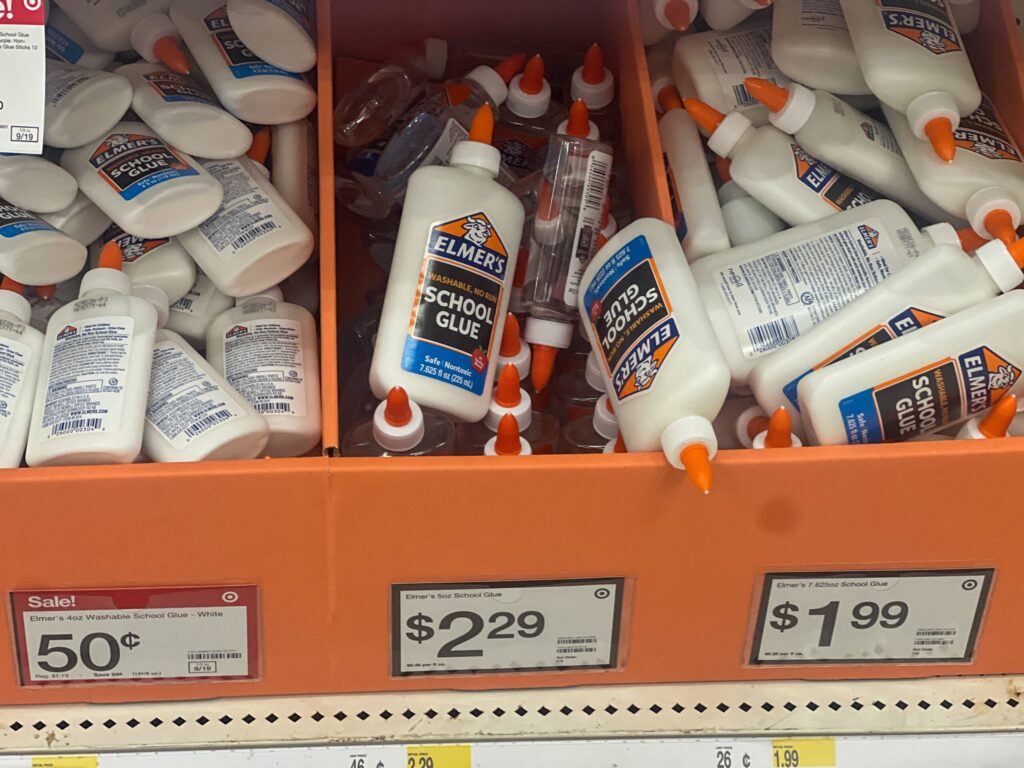
“A substantial portion of school supplies—paper items, pens, glue sticks, computers—are typically imported,” explained Tibor Besedes, economics professor at Georgia Institute of Technology, to the American Independent. “Nearly everything is more expensive due to tariffs.”
Tariffs introduced by Trump on “Liberation Day” in April 2025, targeting various countries and ranging from 10% to 145% for some Chinese products, were nullified by the Supreme Court in February. Nevertheless, the Trump administration quickly enacted new tariffs.
Initially, Trump’s tariffs utilized the 1977 International Emergency Economic Powers Act (IEEPA). After its restriction, new 10% tariffs were announced under Section 122 of the Trade Act of 1974, exempting certain goods and those from Canada and Mexico under a 2020 agreement. However, these tariffs, limited to 150 days, expired in July.
Prior to expiration, the administration announced fresh tariffs of 10%-12.5% on imports from 59 countries and the European Union under Section 301 of the Trade Act, aimed at countries using forced labor. A coalition of 25 U.S. states is currently suing the Trump administration over these tariffs, seeking cancellation and refunds. The lawsuit claims these tariffs impact over 99% of U.S. imports.
Besedes noted that over a year of tariffs has sustained high prices.
“Inflation has slightly eased, but if prices haven’t decreased, it’s due to tariffs,” he explained, “as tariffs have kept prices elevated.”
Some prices rose before tariffs but stayed high afterward. According to the Bureau of Labor Statistics, prices for educational books and supplies rose 9% year-over-year between May 2024 and May 2025, remaining high.
While the federal government lacks detailed tracking of school item prices, private data highlights a dire trend. Groundwork Collaborative, an economic policy think tank, released research in July showing everyday school items cost parents 8% more in 2026 than in 2025, amounting to an extra $175 per family within Trump’s tariff regime.
Groundwork’s data reveals lunchboxes average nearly $19 this year, up over 26% from $14.91 last year. Notebooks cost parents $5 nowadays, a notable increase from the $4 average in 2025.
The federal BLS data also indicates sports equipment prices—a concern for athletic kids’ parents—spiked over 4% between December 2025 and June 2026.
Rudi Leuschner, Rutgers University supply chain management professor, told the American Independent, “Last year’s fluctuating tariffs and trade uncertainty is the new normal.”
Leuschner offered a silver lining for American consumers: Prices likely won’t surge further for this year’s back-to-school shopping.
“All imports went through the new tariff regime,” said Leuschner. “No surprises remain, as retailers have adjusted prices where possible.”
—
Read More Wisconsin News