Understanding Michigan’s Felony Murder Law: A Look at Its Broader Implications
Felony murder laws can have far-reaching consequences for those involved in crimes that lead to unintended fatalities. In Michigan, the implications are particularly severe, with mandatory life sentences for those convicted, regardless of intent or presence during the incident. This article examines the case of Kevin Matlock and how the felony murder doctrine impacts individuals and communities across the state.
The Case of Kevin Matlock
In 2013, Kevin Matlock, a 25-year-old Detroit resident, made a fateful decision. Struggling financially, he and a friend planned a quick robbery of his marijuana dealer. Though Matlock drove to the scene, he did not anticipate the violence that unfolded. His friend, armed with a gun, shot two individuals, resulting in serious injury and the death of a teenager, Brandon Collins. Despite not pulling the trigger, Matlock was charged with felony murder, leading to a life sentence without parole.
How Felony Murder Charges Are Applied
Felony murder charges in Michigan can be applied broadly. As retired Judge Douglas Shapiro notes, prosecutors have significant discretion, stating, “they can pretty much do whatever they want.” This discretion allows for the charge to be applied even when the accused did not intend harm or was not present during the crime. The law doesn’t require proof of intent to kill, but rather that a defendant participated in a felony where a death was a foreseeable outcome.
Disproportionate Impact and Racial Disparities
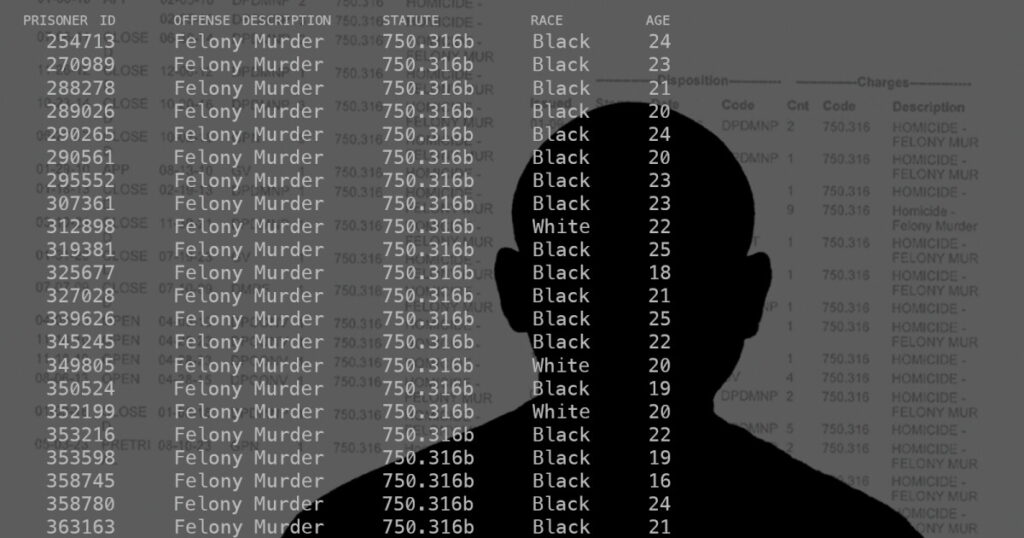
Michigan Public’s analysis highlights a stark racial disparity in felony murder convictions. Since 2000, over 70% of those convicted are Black, a rate three times higher than that of white individuals convicted for similar crimes. This disparity is most pronounced in Wayne County, home to Detroit, where the majority of felony murder convictions involve Black defendants.
Prosecutors’ Perspectives on Felony Murder
Prosecutors like Macomb County’s Peter Lucido emphasize their duty to charge crimes they believe can be supported by evidence, regardless of public sympathy. However, critics argue that this approach leads to disproportionate punishment, especially for those who were not the primary actors in a crime. The charge can serve as a powerful tool for prosecutors to secure convictions or plea deals, as defendants face the daunting prospect of mandatory life sentences if convicted.
Calls for Reform and Legal Challenges
There is growing scrutiny over the application of mandatory life sentences for felony murder. Recent court rulings, including a Michigan Supreme Court decision, have begun to challenge the proportionality of such sentences. Advocates argue for a more nuanced approach that considers individual circumstances and intent. The debate continues over whether the current legal framework fairly administers justice or disproportionately impacts marginalized communities.
Further Reading
For more detailed insights into how felony murder cases are analyzed in Michigan, visit the Michigan Public’s reporting process.
—
Read More Michigan News