Arizona’s New Approach to Colorado River Water Conservation
Amid rising concerns over diminishing water levels in the Colorado River, Arizona is devising innovative strategies to address mandated water reductions. A novel plan involves tapping into an underground water reserve to mitigate the effects of these cuts.
In response to record-low reservoir levels, the federal government has imposed water reduction requirements on Arizona, as well as California and Nevada. Beyond these enforced measures, the states are voluntarily reducing water usage by pooling contributions from various water users, including urban areas and agricultural sectors, to form a substantial overall reduction.
Many of these users receive federal incentives to decrease their water consumption. Recently, officials from the Central Arizona Project unveiled an alternative approach to further this conservation effort. This plan involves certain cities and private utilities in the Phoenix area committing to water conservation efforts in return for access to the Arizona Water Banking Authority’s underground reserves.
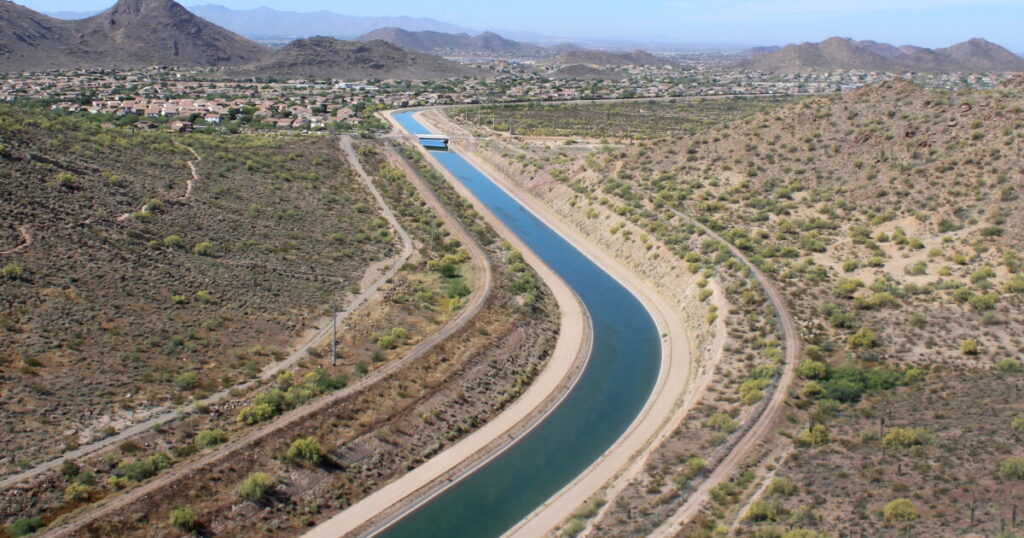
The Arizona Water Banking Authority, established in the late 1990s, was designed to store surplus Colorado River water. Cities drawing water from the Central Arizona Project—a 336-mile canal system that supplies the Phoenix and Tucson areas—had previously contributed water to this reserve, anticipating retrieval during periods of shortage. That time has now arrived.
Earlier this year, discussions among Water Bank authorities and city utility managers focused on access to this reserve during Colorado River shortages. The Water Bank eventually agreed to provide a one-to-one replacement for water lost to mandatory cutbacks for a year, essentially ensuring that utilities would not suffer from these shortages.
The new strategy discussed at the Central Arizona Project board meeting proposes an alternative to mandated cutbacks by allowing voluntary water reductions in exchange for access to stored water.
Greg Adams, a senior attorney from the Central Arizona Project, acknowledged the potential savings from this new initiative might be minimal but emphasized the commitment of state water users. “We’re looking at the couch cushions here,” Adams stated. “But I think this does show broad commitment from water users within the state.”
The broader aim is for Arizona, California, and Nevada to conserve at least 700,000 acre-feet of water by 2028. An acre-foot is sufficient to meet the annual water needs of three homes in the Phoenix area. Tentative projections suggest that this new initiative could save up to 12,308 acre-feet of water this year and potentially 56,179 acre-feet by 2027.
Water savings vary significantly across different municipalities and utilities. The city of Surprise, for instance, might conserve as much as 12,081 acre-feet by 2027, while the Tonto Hills Domestic Water Improvement District in Cave Creek could save 25 acre-feet within the same timeframe.
Adams highlighted that Arizona aims to contribute 300,000 acre-feet of water conservation by 2028. This new strategy is part of a wider effort, including financial incentives for water users and other conservation programs, to achieve and exceed this target. “This goes a long way to getting us to that and surpassing that commitment,” he asserted.
—
Read More Arizona News