Rural Michigan Communities Struggle to Fill Local Government Roles
In the picturesque Seville Township of mid-Michigan, real estate agent Tish Mallory typically spends her days matching homes with potential buyers. But this summer, her mission took a different turn as she navigated the local roads in search of someone willing to step up as township clerk—a role offering $12,960 a year and frequently accompanied by resident criticism.
“I asked several people who said ‘no,'” Mallory recounted, referring to her quest before the deadline to submit names for the November ballot. “We have an appointed clerk now who I had to beg,” she admitted. “‘Please, I need a clerk!'”
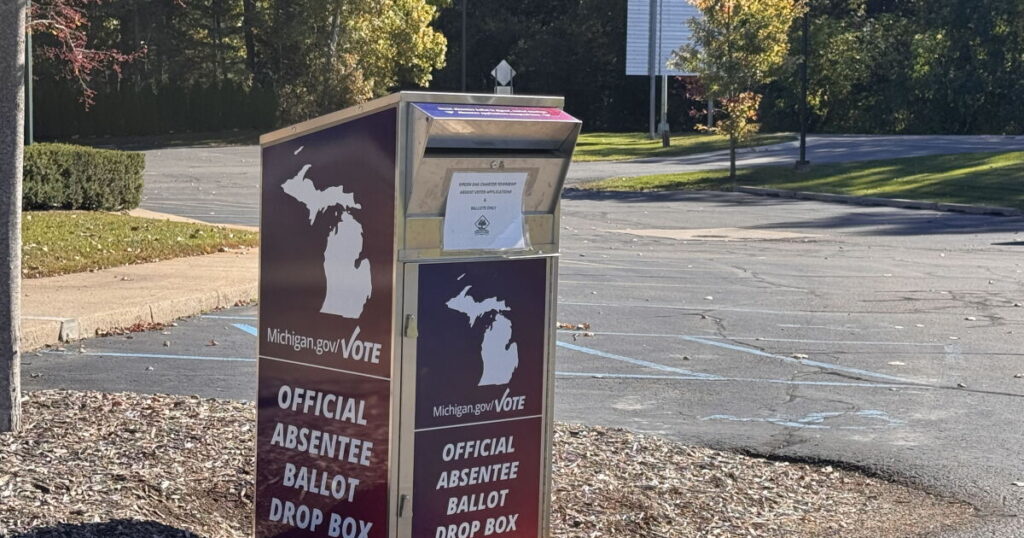
This struggle is emblematic of a larger issue throughout Michigan. A comprehensive analysis by Bridge Michigan highlights a startling trend: at least 478 elected positions lack candidates, potentially leaving close to 10% of these roles unoccupied. These positions range from library boards to school boards and village presidents, with rural areas feeling the most significant impact.
If no candidates emerge, local boards may appoint individuals after the election, but unfilled roles return to the ballot in subsequent elections. This isn’t just a Michigan issue; a study reveals over 10,000 such vacancies across the United States in 2024.
According to a University of Michigan survey, three-quarters of Michigan’s townships and villages report challenges in filling mandatory elected positions. Factors such as national political animosity and declining trust in government contribute to this trend, explains Stephanie Leiser from U-M’s Center for Local, State, and Urban Policy.
“Who wants to sign up for a low-paying job where you’re officially working 12 hours (a week) but it’s more like a full-time job,” Leiser said. “And by the way your neighbors may hate you.”
The vacancies are concerning because these roles significantly impact community life, from tax collection to election management. Leiser adds, “We want smart, motivated people in these jobs. If you’re just begging people to take positions, you’re probably not going to get the most qualified person.”
With over 14,500 elected local government positions in Michigan, most roles are part-time, especially in rural areas where salaries often fall below $10,000 annually. For instance, trustees in smaller townships might earn as little as $50 per meeting, while many school and library boards are unpaid.
Bridge Michigan’s survey identified 145 school board posts, 151 village board posts, and 29 library board positions without candidates. The city of Laingsburg lacks a mayoral candidate, as does Omer City, which also faces two vacant city council seats.
In New Lothrop Village, Shiawassee County, there are no candidates for village president. “What are we going to do?” asked Karen Maksimchuck, the village’s clerk of 39 years. Her husband is temporarily filling the role until a replacement is found post-election.
The issue extends beyond clerical roles. In Bridgehampton Township, for instance, the clerk’s position remains unfilled, partly due to recent constitutional changes requiring additional voting days, increasing the workload. “There’s been a heavy turnover of clerks in the last four years,” noted Supervisor Leo Sonck.
In Ingallston Township, near the Wisconsin border, the search for a treasurer continues. Supervisor Dan Bartell remarked, “It’s a really good position for somebody that’s retired and can be part-time, work from home, earn a few extra bucks. But generally, people don’t like to deal with the public.”
Declining community involvement further exacerbates the problem. Michael Siegrist, clerk of Canton Charter Township, attributes the difficulty in finding candidates to a decrease in public service interest. “Volunteerism is down everywhere,” he noted, referencing membership declines in civic organizations like the Jaycees.
Proposals to ease the strain on local government roles, such as bills providing financial and logistical support, have stagnated in Lansing. Meanwhile, some townships are creatively adapting by appointing deputies or switching elected positions to employee roles.
As for Mallory in Seville Township, the search continues for a willing candidate for the 2028 clerk election. “It’s hard,” she reflects. “Somebody’s gotta do it.”
___
This story was originally published by Bridge Michigan and distributed through a partnership with The Associated Press.
—
Read More Michigan News