In an unprecedented year for Michigan’s electoral landscape, the 2026 midterm elections have carved out a significant place in the state’s political history. With record-breaking voter turnout and intense electoral battles, the results have illuminated shifting political dynamics and voter engagement patterns across the state.
Michigan’s Evolving Voter Turnout Landscape
This election cycle saw a notable increase in voter participation, with preliminary data indicating heightened turnout in counties like Wayne, Kent, and Washtenaw. While many rural areas, such as Oscoda and Ogemaw counties, also experienced increased voter engagement, these regions maintained a strong Republican presence despite a slight Democratic shift.
Michigan State University Political Science Professor Corwin Smidt noted the trend, stating, “What we know about voting is its habit-forming,” emphasizing the impact of repeated electoral engagement on voter behavior.
However, the Republican margin remained robust in Oscoda and Ogemaw counties, highlighting the complex political fabric of Michigan’s rural areas.
Benson’s Dominance in Statewide Races
Governor-elect Jocelyn Benson emerged as a standout figure in the 2026 elections, outperforming her Democratic peers in every county. Her success surpassed that of U.S. Senate candidate Abdul El-Sayed, Attorney General candidate Eli Savit, and Secretary of State candidate Garlin Gilchrist, suggesting a strong voter preference for her leadership.
Benson’s performance aligns with a historical pattern in Michigan, where gubernatorial candidates often outshine their party’s other statewide contenders. This phenomenon is partly attributed to ticket splitting, a common practice among voters who choose candidates from different parties for various offices.
Midterm Elections: A Broader Representation of Michigan’s Electorate
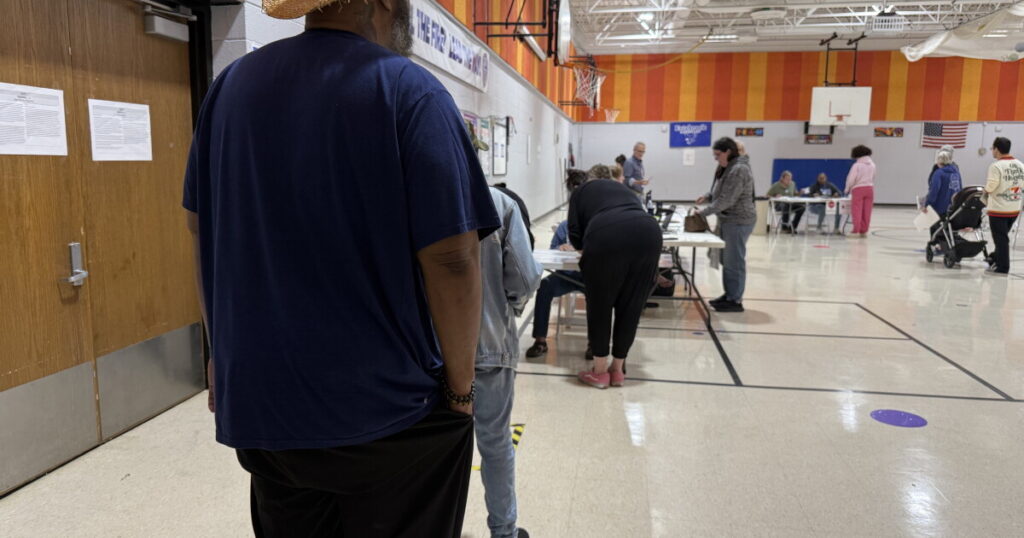
The 2026 midterm elections marked a significant increase in voter turnout, with approximately 60% of Michigan’s voting-age population casting ballots. This contrasts sharply with past midterm elections, where participation hovered around 40%.
Counties like Leelanau experienced even greater engagement, with over 80% voter turnout. However, the August primary election, which featured competitive Democratic and Republican races, did not see a similar level of participation, suggesting a need for increased focus on primary voter engagement.
Absentee and Early Voting Trends
Absentee voting played a critical role in the 2026 elections, with at least 40% of voters opting to mail or drop off their ballots. This shift towards early voting has altered campaign strategies, diminishing the potential impact of late-breaking developments.
Despite this trend, early in-person voting saw limited uptake, raising questions about the allocation of resources for different voting methods. As Michigan prepares for future elections, including its early position in the 2028 Democratic presidential primaries, the state’s election infrastructure will face further scrutiny.
City-Specific Turnout Dynamics
Michigan’s urban centers presented a mixed picture regarding voter turnout. Detroit Clerk Janice Winfrey’s expectation of record-breaking turnout fell short, with the city achieving a 39% turnout rate. Conversely, Grand Rapids recorded a 53% turnout, consistent with previous midterm elections.
Dearborn stood out with a significant 57% turnout, surpassing previous midterm and presidential election rates. Mayor Abdullah Hammoud attributed this surge to candidates addressing the concerns of working-class families.
Dearborn Mayor Abdullah Hammoud told NPR, “I think what got them to the polls are candidates who centered the issues of working class families.”
—
Read More Michigan News