
Arizona Supreme Court Sends Fake Elector Case Back to Grand Jury
In a significant development in the ongoing legal battles involving the 2020 presidential election, the Arizona Supreme Court has rejected a prosecutor’s appeal to proceed with charges against key figures including President Donald Trump’s former chief of staff Mark Meadows and former New York City Mayor Rudy Giuliani. The case, which is part of the state’s investigation into a fake elector scheme, has been ordered to return to the grand jury for further review, according to a recent decision from the court.
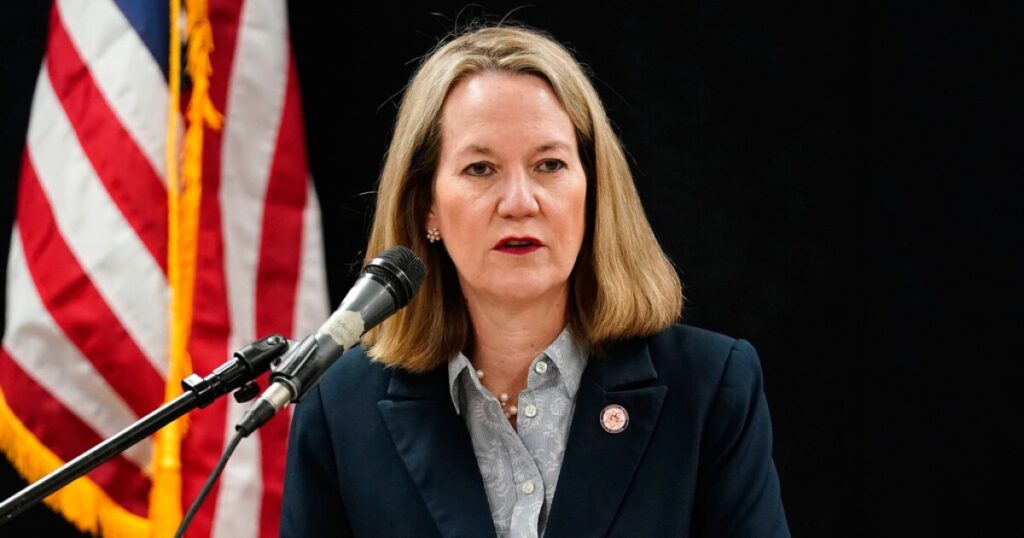
This ruling represents a setback for Democratic Attorney General Kris Mayes, who has been pushing the complex case through the judicial system. Despite the court’s decision, Mayes’ office intends to present the full case once more to a grand jury, maintaining their commitment to pursuing the matter. Further comments from the Attorney General’s office have not been made available.
The Arizona case follows similar legal proceedings in Michigan and Georgia, where courts have dismissed cases, as well as a federal case that was dropped by a special prosecutor. However, Arizona, along with states like Nevada and Wisconsin, continues to deal with the ramifications of the alleged fake elector plot.
A Phoenix judge previously determined that the initial grand jury failed to receive the text of the Electoral Count Act, a critical 19th-century law relevant to the certification of presidential elections. Defense attorneys have used this law, amended in 2022 to limit the submission of elector slates, as part of their defense strategy, arguing its provisions justified their clients’ actions. Mark L. Williams, representing Giuliani, expressed approval of the court’s ruling, casting doubt on whether the prosecution will follow through with its intention to revisit the grand jury process. Williams stated, “Mr. Giuliani has done nothing wrong.” The case has seen little progress since May 2025 at the trial court level.
Arizona, a key battleground state in 2020, saw former President Joe Biden secure victory with a margin of 10,457 votes. The state attorney general’s office has faced considerable obstacles, as the case involves intricate conspiracy charges against 18 defendants, filed over three years post-election. Numerous motions to dismiss from defense teams have contributed to delays in the proceedings.
Complicating the situation, the initial judge recused himself in late 2024 due to a controversial email regarding Kamala Harris’ presidential campaign, leading to the appointment of a new judge who mandated a return to the grand jury. Among the 18 individuals charged, two were former aides to Trump, five were Trump-affiliated lawyers, and 11 were Republicans accused of falsely declaring Trump as the Arizona victor. While three defendants have settled their cases, including one guilty plea to a misdemeanor, others face charges of conspiracy, fraud, and forgery, asserting that their actions were contingent on potential court rulings favoring Trump before the January 6 congressional vote count.
In a separate legislative development, Governor Katie Hobbs vetoed a $17.9 billion budget proposal, criticizing it as “unbalanced and reckless.”
—
Read More Arizona News

![Jody White’s Unconventional Michigan Supreme Court Candidacy Explored[embed]https://www.youtube.com/watch?v=8NfxFIPE4ac[/embed]](https://www.kitchentablenews.org/wp-content/uploads/2026/10/Jody-Whites-Unconventional-Michigan-Supreme-Court-Candidacy-Exploredembedhttpswwwyoutubecomwatchv8NfxFIPE4acembed.com2F842F0e2Fc7223daa43c9876b36a4e00773a42Fme-supc.png "Jody White’s Unconventional Michigan Supreme Court Candidacy Explored[embed]https://www.youtube.com/watch?v=8NfxFIPE4ac[/embed]")