The Science Behind the Scent of Rain: Petrichor
Have you ever wondered why the air smells so unique right after it rains? This familiar fragrance has an official name: petrichor. Stemming from the Greek words ‘petra’ meaning ‘rock,’ and ‘ichor,’ which translates to ‘divine blood,’ this scent is a blend of plant oils and a compound named geosmin, which is produced by soil-dwelling bacteria.
Petrichor is more than just a pleasant smell; it plays a crucial role in nature. The scent lures springtails—tiny six-legged creatures—to the soil. These organisms consume the bacteria that produce geosmin, aiding in the dispersal of bacterial spores and ensuring the continuation of their life cycle. This interaction is a testament to an ancient ecological symbiosis.
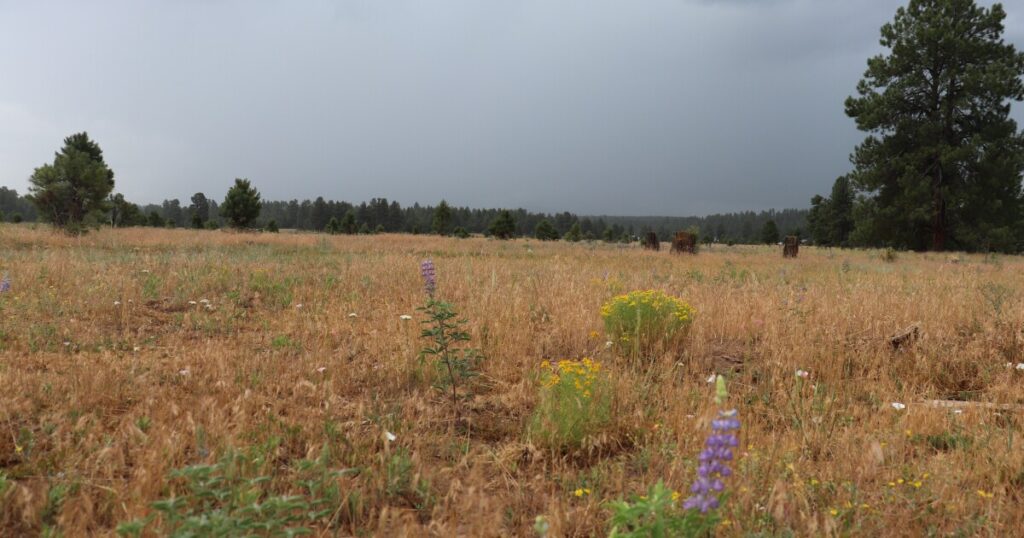
The aroma of petrichor can vary significantly depending on the surroundings. For instance, in arid desert landscapes, it exudes a spicy, leather-like scent. Conversely, in the pine forests of Arizona, the presence of terpenes from tree resin results in a fresher, sharper smell.
During dry spells, the compounds responsible for petrichor accumulate on plant leaves and the soil. When rain finally arrives, these compounds are trapped in tiny bubbles created upon impact. Like the effervescence in a glass of champagne, these bubbles ascend and burst, releasing a fragrant mist into the atmosphere.
Interestingly, the human nose is incredibly attuned to petrichor, capable of detecting it in concentrations as minute as one hundred parts per trillion. Such sensitivity might be an evolutionary trait, alerting our ancestors to the presence of water.
So the next time you inhale that fresh, earthy aroma following a rainfall, remember that you are experiencing a scent that has graced our planet for over 300 million years.
This Earth Note was written by Diane Hope and produced by KNAU and the Sustainable Communities Program at Northern Arizona University.
—
Read More Arizona News