Federal Wildlife Officials Adjust Status of Razorback Sucker in Colorado River
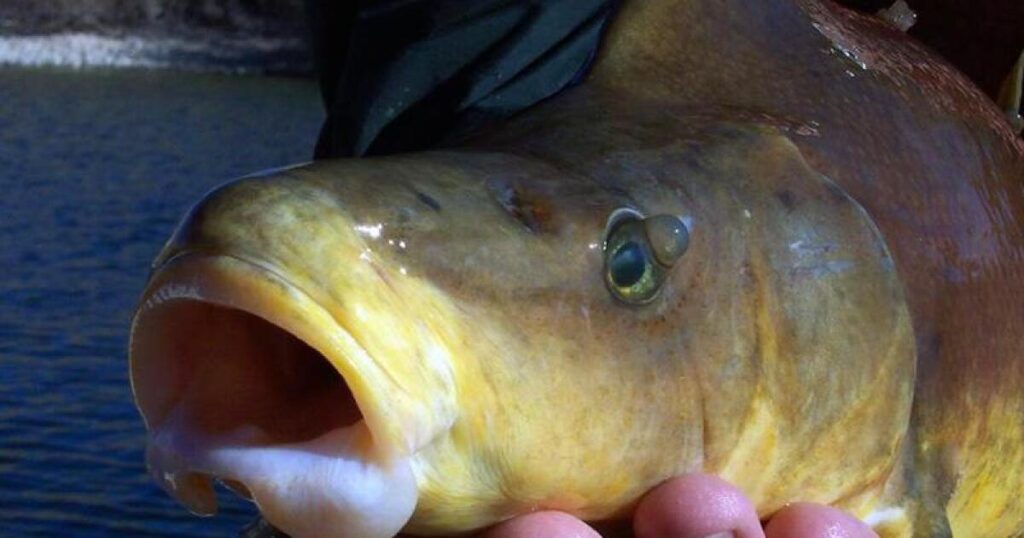
A key native fish in the Colorado River, the razorback sucker, has seen a change in its conservation status, moving from “endangered” to “threatened” as per the U.S. Fish and Wildlife Service. This reclassification reflects progress in the species’ recovery, although environmentalists argue that the fish still confronts significant survival challenges in its natural habitat.
The razorback sucker, which can reach lengths of up to three feet and live for four decades, is unique to the Colorado River basin. Among about 25 species endemic to this region, four are currently protected under the Endangered Species Act. These species encounter numerous threats in a river system increasingly affected by drought and human alterations.
Originally listed as endangered in 1991, the razorback sucker has been the focus of intensive monitoring and management by federal authorities. Efforts have included stocking parts of the river basin with hatchery-raised fish and controlling invasive species.
According to a U.S. Fish and Wildlife Service press release, the fish populations have shown significant recovery due to “more than three decades of cooperative work.”
“The species’ status has improved such that it is not currently in danger of extinction throughout all or a significant portion of its range,” the agency explained in their decision to reclassify the fish, “But that it is still likely to become so within the foreseeable future.”
Environmental advocates, however, caution that major threats persist for the razorback sucker. Taylor McKinnon from the Center for Biological Diversity highlighted the species’ difficulty in reproducing naturally.
“The Fish and Wildlife Service’s own plan for these fish calls for self-sustaining populations prior to downlisting,” he noted. “We don’t have that yet. So, in rendering this decision, they’ve also disregarded their own criteria for downlisting from endangered to threatened.”
McKinnon criticized current practices where razorback suckers are introduced into habitats only for their offspring to fall prey to invasive fish, likening it to a “feeding program” for these non-native species.
Environmentalists believe that new water-sharing guidelines should be implemented to ensure the river’s sustainability for all dependent life forms, including plants, animals, and human infrastructures.
Speculation arises as to why the fish’s status was downgraded despite ongoing survival challenges. McKinnon suggested, “Some of the recovery funding is reauthorized by Congress periodically. It could be that the Fish and Wildlife Service is under political pressure to show progress on recovery where not as much progress as they’re alleging actually exists.”
Lake Mead is cited by the Fish and Wildlife Service as a success in razorback sucker recovery, being the sole location with a self-sustaining population. This population was estimated to consist of 578 adults in 2023.
The Arizona Game and Fish Department supported the downlisting, describing it as a “significant conservation achievement” while emphasizing the need for ongoing protection and management to ensure the species’ long-term recovery.
Competition from invasive fish remains a significant threat to the Colorado River’s native species, many of which are crucial to the ecosystem’s balance. Some initiatives to manage these threats are challenged by decreasing water availability, such as the release of “cool mix flows” from Lake Powell aimed at protecting native species in the Grand Canyon.
In a similar case, the humpback chub, another native fish of the Colorado River, was also reclassified to “threatened” status in late 2021. McKinnon warns that the struggles faced by the razorback sucker highlight broader ecological issues.
“The fact that they’re now on the brink of extinction is a bellwether for the health of the entire river ecosystem,” he stated. “If these fish can’t hang on, then a lot of the native species can’t hang on, and it signals an ecosystem in sharp decline. Our societies depend on a healthy Colorado River system, and these fish are the canary in the coal mine.”
—
Read More Arizona News