Lake Mead’s Water Levels Drop to Historic Lows, Highlighting Colorado River Crisis
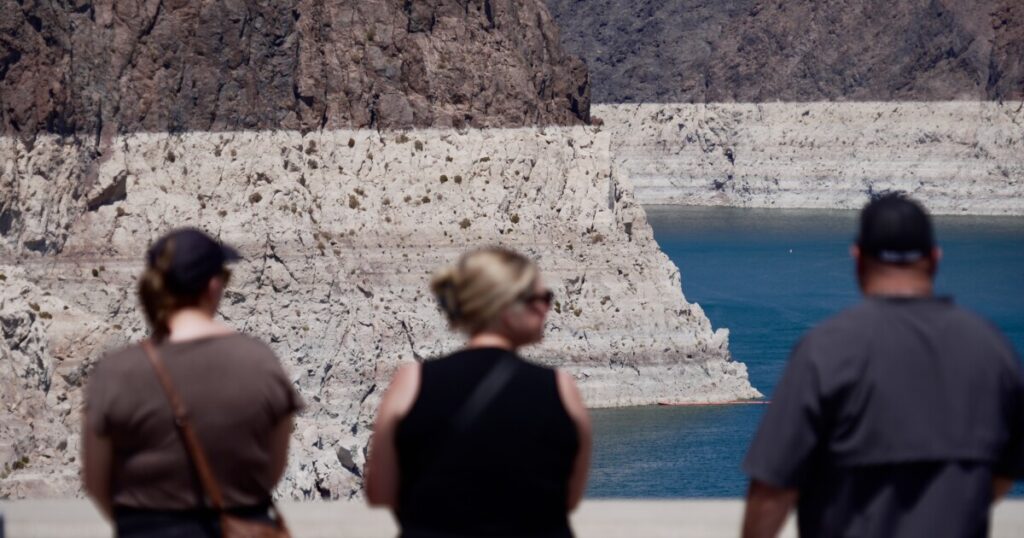
In an alarming development, Lake Mead, the largest reservoir in the U.S., has reached unprecedented low water levels, underscoring the ongoing water crisis affecting the Colorado River system. The reservoir, situated on the Arizona-Nevada border near Las Vegas, recorded a water level of 1,040.4 feet above sea level last Friday, marking a new low since it was first filled nearly 90 years ago, according to federal data.
J.B. Hamby, chairman of the Colorado River Board of California, emphasized the gravity of the situation, stating, “It’s extremely significant and extremely concerning. You have three-quarters of the population of the Colorado River Basin, some 30 million people, who are directly impacted by risks to Lake Mead.” Hamby also highlighted the importance of reducing water usage across states reliant on the Colorado River.
The crisis is exacerbated by prolonged drought conditions and reduced snowpack in the Rocky Mountains, which serve as a crucial water source for the river. This past winter witnessed the worst snowpack on record for the Colorado River Basin, impacting millions, including farmers, industries, and hydropower producers across seven U.S. states, tribal nations, and Mexico.
Lake Mead, along with Lake Powell, the second-largest reservoir in the nation, is at its lowest point in nearly 70 years due to a combination of overuse, drought, and rising temperatures. As part of an effort to preserve the hydropower generation capacity of these reservoirs, federal officials decided against releasing cool water from Lake Powell despite the potential harm to the habitat of the threatened humpback chub fish.
In response to the ongoing crisis, federal authorities have proposed a short-term plan to address the water shortage, given the failure of the states dependent on the river to reach a long-term consensus on resource allocation. The proposal suggests that Arizona, California, and Nevada—the Lower Basin states—reduce their water usage, with adjustments based on changing conditions. The Bureau of Reclamation’s plan allows for flexibility in water cuts depending on the severity of drought conditions.
Compounding the issue, last year’s severe drought at Lake Mead exposed human remains and forced water authorities in Las Vegas to extract water from deeper sections of the reservoir to maintain supply for millions. Meanwhile, Lake Powell’s water levels have fallen so drastically that accessing the water has become challenging, necessitating modifications to boat ramps.
Of the 54 Western reservoirs tracked by the Bureau of Reclamation, nine recently hit their lowest levels in three decades, illustrating a broader regional water scarcity issue. Current projections indicate that Lake Mead’s levels will continue to decline for the remainder of the year, according to federal models.
The Associated Press receives support from the Walton Family Foundation for coverage of water and environmental policy.
—
Read More Arizona News