An Ornamental Marvel with a Cautionary Tale: The Bradford Pear
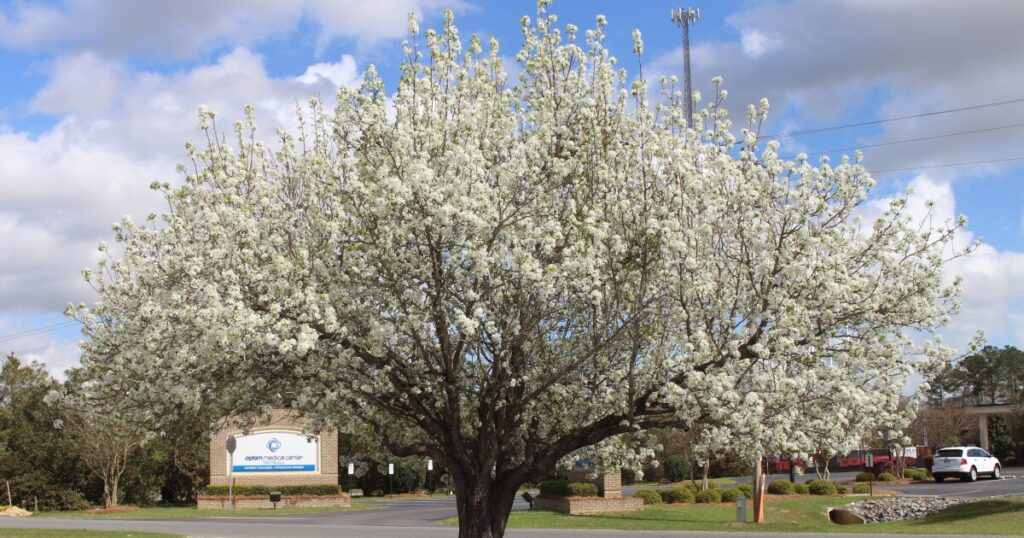
As spring unfolds across the United States, the landscape is dotted with white blossoms that are both visually striking and notorious for their pungent odor reminiscent of rotting fish. These blossoms belong to the Bradford pear, a tree with a fascinating and cautionary history.
The story of the Bradford pear begins in 1898 when the federal Foreign Seed and Plant Introduction Office was established to import economically significant plants from around the globe. Among the adventurers drawn to this program was Frank Meyer, a Dutch immigrant who embarked on multiple expeditions to China. Meyer’s mission was driven by a crisis back home—American orchards of the edible French pear were suffering from a devastating blight.
In his search for a solution, Meyer discovered the tough and resilient Chinese “Callery” pear, a plant capable of thriving in diverse and challenging environments, from standing water to dry, rocky soils. He meticulously gathered hundreds of pounds of seeds. Although Meyer tragically passed away in China, his legacy persisted. The Callery pear seeds he collected were cultivated experimentally, and the French pears were grafted onto them, resulting in trees that were more resistant to disease.
It was decades later when horticulturists observed that one of these experimental trees boasted attractive white blooms and was devoid of thorns. This tree was named the “Bradford” cultivar, and it was commercially introduced in 1961, quickly becoming a popular ornamental choice in North America.
However, the Bradford pear’s beauty masked a problem. In some U.S. regions, the tree began to spread uncontrollably. Cross-pollination with other trees led to the production of fruit, which birds then distributed, allowing the pear to escape from its intended locations, such as parking lot islands.
Today, the Callery pear is largely regarded as an invasive species. In response, several states have banned the tree and initiated programs to replace it with native species.
This episode of Earth Notes was written by Danike Thiele and produced by KNAU and the Sustainable Communities Program at Northern Arizona University.
—
Read More Arizona News

![Jody White’s Unconventional Michigan Supreme Court Candidacy Explored[embed]https://www.youtube.com/watch?v=8NfxFIPE4ac[/embed]](https://www.kitchentablenews.org/wp-content/uploads/2026/10/Jody-Whites-Unconventional-Michigan-Supreme-Court-Candidacy-Exploredembedhttpswwwyoutubecomwatchv8NfxFIPE4acembed.com2F842F0e2Fc7223daa43c9876b36a4e00773a42Fme-supc.png "Jody White’s Unconventional Michigan Supreme Court Candidacy Explored[embed]https://www.youtube.com/watch?v=8NfxFIPE4ac[/embed]")