The Rise and Fall of a Grand Canyon Landmark
In the late 19th century, the allure of the Grand Canyon was not just its breathtaking vistas but also the promise of economic opportunity. Pete Berry, a miner and entrepreneur, embarked on a venture to extract copper ore from a mine located on Horseshoe Mesa, 3000 feet below the South Rim’s Grandview Point. Despite the high-quality ore, the cost of transporting it to a distant smelter, compounded with declining copper prices, made the venture less profitable than anticipated.
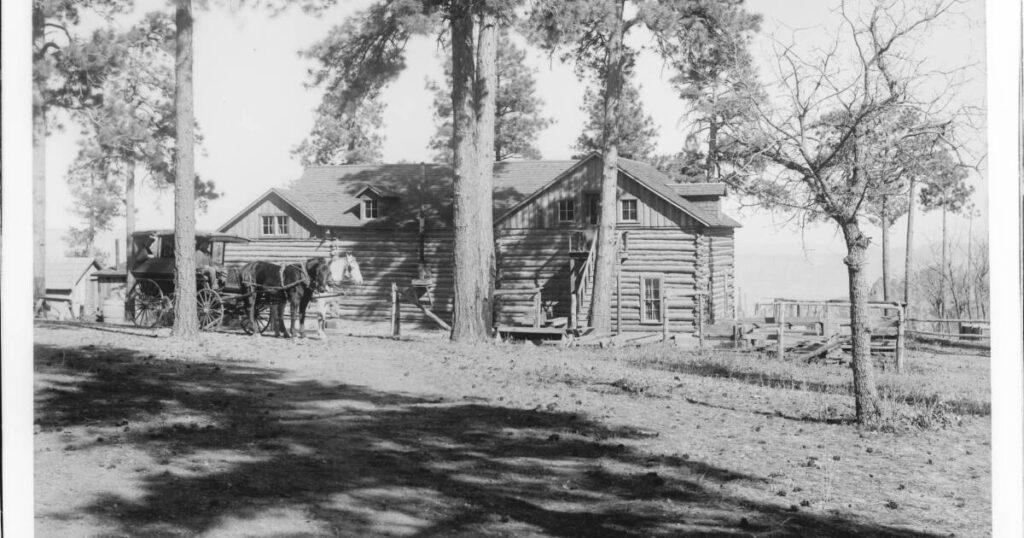
Recognizing the burgeoning interest in tourism, Berry and his wife, Martha, shifted their focus. By 1897, they had opened the Grandview Hotel, constructed from robust ponderosa pine. This establishment quickly became the epicenter of early tourism at the Canyon, offering weary travelers hot meals and comfortable beds after their 12-hour stagecoach journey from Flagstaff.
However, the fortunes of the Grandview Hotel were short-lived. In 1901, the completion of the Santa Fe Railroad’s spur to Grand Canyon Village, situated 11 miles to the west, provided tourists with a faster and more comfortable travel option, leading to a steep decline in the hotel’s visitors.
By 1907, the Berrys decided to sell the property to William Randolph Hearst, a prominent newspaper publisher. Hearst eventually dismantled the hotel, yet its legacy endures. Some of the ponderosa timbers from the Grandview Hotel were repurposed in the construction of the Desert View Watchtower, where they still stand today.
This account of the Grandview Hotel’s history was made possible by funding from Pink Jeep Tours, with writing by Steve Schwartz, and production by KNAU and the Sustainable Communities Program at Northern Arizona University.
—
Read More Arizona News