Waiting in line at a town hall in Lansing, Michigan, Christina Starks-Clay reflected on her mounting dental bills. Despite having insurance, she faced a $1,000 expenditure for her son’s dental care and still owed $389. Her story is not unique; many Americans are grappling with soaring healthcare costs, leading them to contemplate solutions like “Medicare for All.”
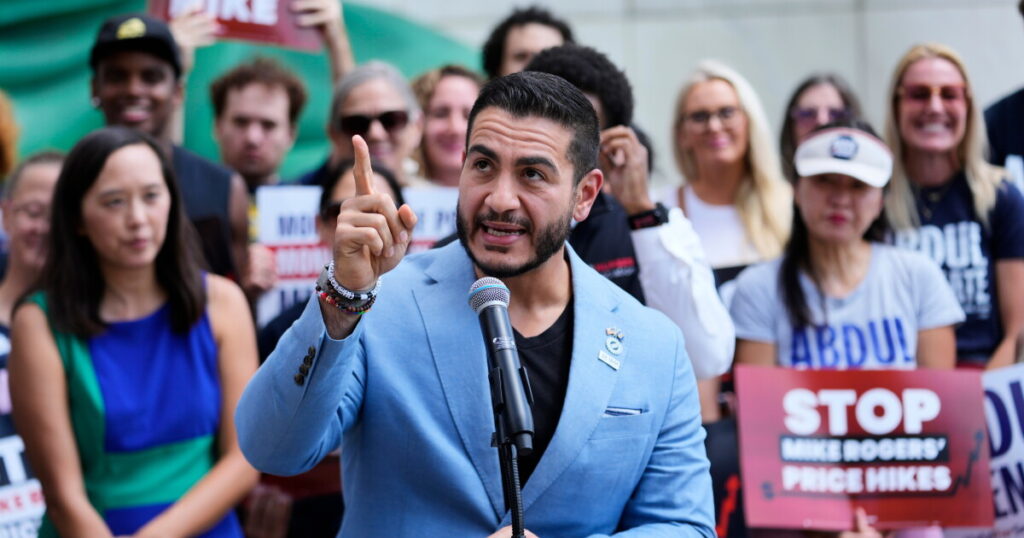
Christina, a special education paraprofessional, attended the event to hear U.S. Senate candidate Abdul El-Sayed and others discuss the possibilities of a healthcare overhaul. “A lot of people couldn’t do what I had to do today,” she said, highlighting the financial strain many face. “I need to hear, how are you going to make this better for everyone?”
During the town hall, attendees shared their own healthcare struggles. Some spoke of overwhelming medical debts, while others expressed concerns over high insurance deductibles. Healthcare professionals described patients having to choose between essential medication and food.
The idea of “Medicare for All” has gained traction, with a KFF poll indicating that two-thirds of Americans now support expanding government healthcare. Despite this, many remain unclear on how such a system would function, though it symbolizes a desire for change.
Jonathan Oberlander, a healthcare politics expert at the University of North Carolina at Chapel Hill, noted, “Too many people don’t have health insurance, too many people who do have insurance can’t afford medical care.”
Democrats like El-Sayed have made “Medicare for All” a central campaign issue, especially in Michigan, where he has long advocated for systemic healthcare reform. His background as a doctor and public health official adds credibility to his campaign promises.
American Dream or Pipe Dream?
The idea of universal healthcare has been a focal point in progressive circles, with its popularity ebbing and flowing. However, rising healthcare costs have kept it in the spotlight. The Affordable Care Act initially reduced the uninsured rate, but recent years have seen setbacks due to policy changes.
In Michigan, cuts to Medicaid and rising insurance premiums have exacerbated the situation. At the town hall, Darleana Ash, a medical diagnostics lab worker, shared her concerns about patients skipping necessary tests due to costs.

Republican candidate Mike Rogers, El-Sayed’s opponent, argues against Medicare for All due to its high costs. He claims that shifting to such a system would require significant financial sacrifice from citizens.
A Yale study suggests that while Medicare for All would cost approximately $4.2 trillion annually, it could potentially save $1 trillion in overall healthcare spending.
Despite the challenges, Medicare for All remains a contentious issue, with strong opinions on both sides. As the midterm elections approach, healthcare continues to be a pivotal topic, influencing voter decisions nationwide.
This story was produced as part of NPR’s health reporting collaboration with KFF Health News, a national newsroom that produces in-depth journalism about health issues and is one of the core operating programs at KFF — the independent source for health policy research, polling, and journalism.
Copyright 2026 KFF Health News
—
Read More Michigan News