Business organizations in the Western United States are urging the federal government to allocate at least $2 billion for crucial projects along the Colorado River. Chambers of commerce from numerous states have appealed to Congress for funding that would ensure the long-term sustainability of water, food, and energy for the communities reliant on the river’s resources.
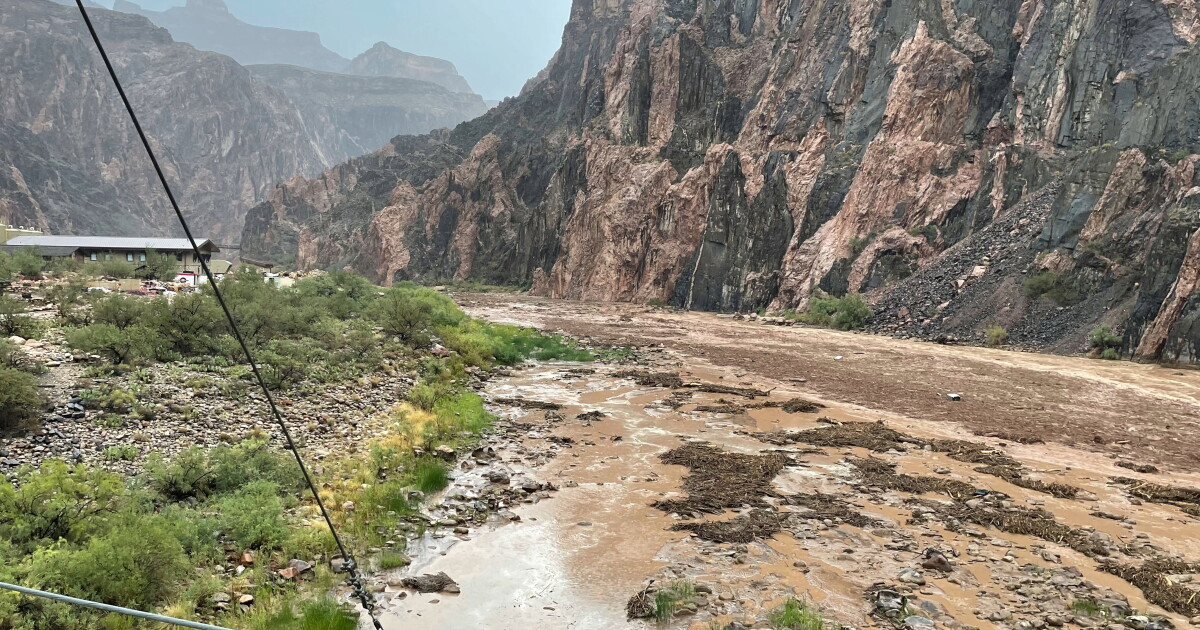
The Colorado River, a vital water source for approximately 40 million people across seven states, faces severe depletion due to prolonged droughts and climate change. As part of a new federal strategy to manage diminishing reservoirs, substantial water usage reductions are being imposed on Arizona, California, and Nevada.
Historically, federal financial assistance has significantly helped the region adapt to drier conditions. The recent appeal to Congress from business groups seeks additional funds to sustain the region’s economy amidst water scarcity.
“This is a big deal to the West Coast economy especially, and the economy as a whole,” commented Mike Huckins, spokesperson for the Greater Phoenix Chamber, a signatory of the letter. “So the federal government should have some stake in the game for helping us fund some of these solutions.”
Federal funding could support a variety of initiatives, including repairing urban water systems and mitigating wildfire risks near waterways. Previously, federal funds have compensated cities and farmers for conserving water in major reservoirs.
Cities around the Phoenix area are reducing their take on the Colorado River and leaving water in Lake Mead. Millions of dollars from the Inflation Reduction Act are helping ease the pain.
The request for funding arises amidst ongoing disputes. The seven states using the river have long been engaged in challenging negotiations over water cutbacks but have not reached a consensus. The Upper Basin states—Colorado, Utah, Wyoming, and New Mexico—and the Lower Basin states—Arizona, California, and Nevada—remain divided, with potential legal battles looming on the horizon.
Despite these divisions, the new letter includes signatories from all seven states. Notable support comes from groups such as the Greater Phoenix Chamber and the Denver Metro Area Chamber of Commerce, who agree on the necessity of substantial regional funding for water projects.
Sen. Tim Dunn (R-Yuma) emphasized the importance of federal support for the Colorado River, focusing on sustainable, long-term initiatives. “We’re very conscious about just trying to do stuff that’s just a band-aid,” he stated. “We want to make sure [they’re] long-term investments. That’s how we built the West.”
Earlier in the year, a different coalition also requested $2 billion from Congress. This group included farm districts, environmental nonprofits, Native American tribes, and urban areas.
In Arizona, calls for federal assistance have amplified following mandatory water cuts imposed on Arizona, California, and Nevada, leaving upstream states unaffected. Phoenix’s water resources advisor, Max Wilson, argues that the federal government has a duty to aid the Lower Basin states in managing these new challenges.
“The federal government has made a choice to place all of this burden exclusively on the Lower Basin, and choices have consequences,” Wilson stated during an August meeting. “Part of that consequence is that they are going to have to be part of funding the billions and billions of dollars of infrastructure it is going to take to withstand the harm that they are causing to the Lower Basin.”
Wilson indicated earlier this summer that Phoenix can endure the water reductions but will need significant investments in technology and infrastructure to maintain water supply, leading to increased costs for consumers.
Regional water leaders have highlighted extensive funding needs and proposed projects to the Interior Department, estimating costs exceeding $25 billion in Arizona alone, to help cities, farms, and tribes adapt to a drier future.
—
Read More Arizona News