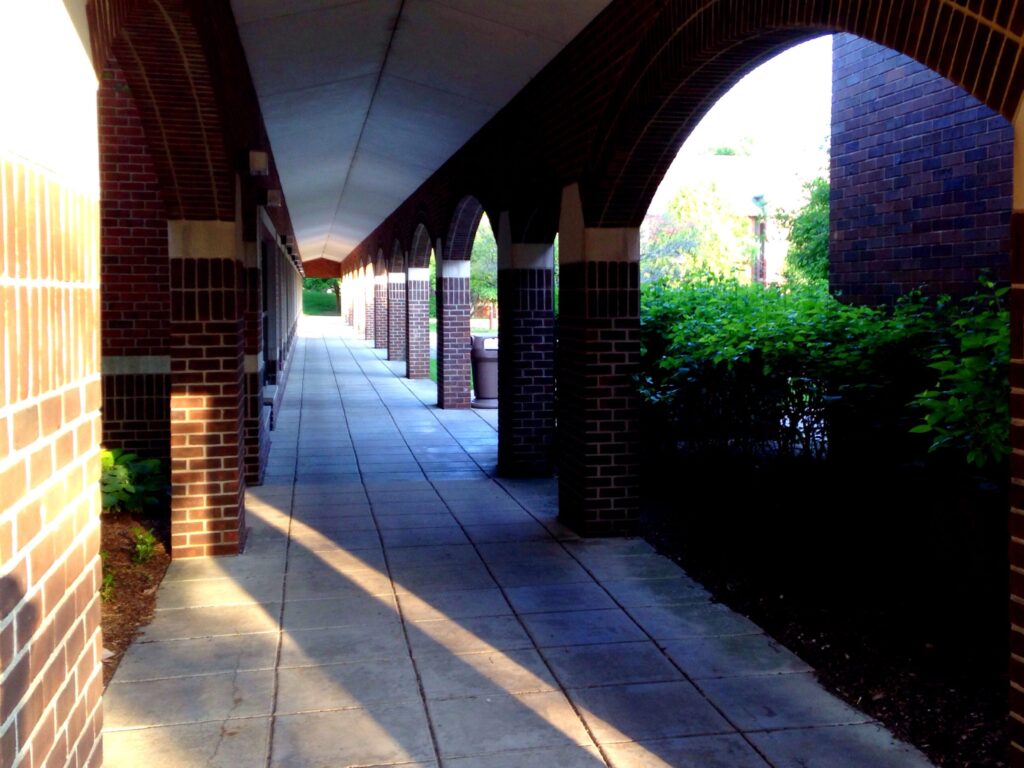
Glass doors open into a bright lobby of a redbrick and limestone chapel at one end of a grassy quad, where lectures and receptions once took place and students shared their faith experiences.
Original artworks adorn the walls leading to the music department, chaplain’s office, and recital hall, alongside brass “leaves” shaped like a tree, displaying names of past donors.
This virtual tour of Trinity Christian College in Palos Heights, Illinois, was created before the college closed in May to allow students and alumni to remember the campus. It is being sold to pay off over $26 million in debt and liabilities.
“Instead of being wiped off the map, this is a way to honor the legacy” of the college, stated Shalom Nwaokolo, who, with his wife, Ashley, is working on digitally preserving it.
Virtual reality memorials for colleges are a sentimental response to the rapid pace of closures. The trend has led to significant actions addressing declining enrollments, rising debt, and other issues.
The federal government aims to streamline the takeover process by healthier institutions. States have boosted consumer protections when campuses close, and proposals for federal-level safeguards are underway. Lawsuits against closed schools are increasing, and institutions are seeking new revenue sources.
Twenty-two states require private higher education institutions to contribute to “tuition recovery” funds, ensuring compensation for students if colleges shut down. Initially meant for for-profit schools, nearly half now cover nonprofit colleges.
“This is an opportunity for states to protect students in the event of these closures, because we’re probably going to see more of them,” said Preston Cooper from the American Enterprise Institute, who advocates for similar federal protections.
In Massachusetts, where 26 colleges have closed since 2014, a law mandates private colleges to provide financial reports for public review. Regulators conduct annual assessments to disclose institutions at risk of failing.
The Department of Education is expediting processes for mergers between healthy and struggling institutions, which officials say often take too long, leading one party to withdraw.
Legal firms are filing lawsuits for students and staff of closed colleges, mainly alleging fraud and breach of contract. The University of the Arts in Philadelphia faces three class-action suits after its abrupt 2024 closure.
Over 440 of the 1,700 private nonprofits, nearly a quarter, risk closure or mergers in the next decade, according to Huron Consulting Group. More than 120 are at high risk due to their enrollment, assets, debt, and other factors.
The Education Department has issued guidance for students on handling college closures, advising them to remain calm.
Less than half of students at closed colleges continue their education, according to the State Higher Education Executive Officers Association. Many lose credits and fewer than half earn degrees. The 442 at-risk colleges have 670,000 students collectively.
Consumers can apply for federal loan forgiveness through the Borrower Defense to Repayment and Closed School Discharge programs, though this shifts the debt burden to taxpayers.
There are increasing calls for colleges to set aside funds for these costs. “We need to think about how students are protected, so when they invest in their degrees, they can get refunds and loan discharges,” Cooper emphasized.
Some colleges are seeking new revenue. Agnes Scott College in Georgia rents historic homes. Sweet Briar College in Virginia sells hydroponic lettuce. The University of California, Davis sells products from its research olives, and Alaska sells firewood permits.
The Nwaokolos see a business opportunity in virtual tours as more colleges close. “It’s possible that others will want this too,” Ashley Nwaokolo said. They have created Perduras for digital preservation.
“There’s so much life that happens at college,” Ashley Nwaokolo noted. “It’s a crossroads of maturity. You have a community around you going through similar experiences, creating good memories and attachments.” With digital recreations, “people can have history to return to.”
She added, “What do you do for a homecoming when there’s no place to come home to?”
—
Read More Kitchen Table News