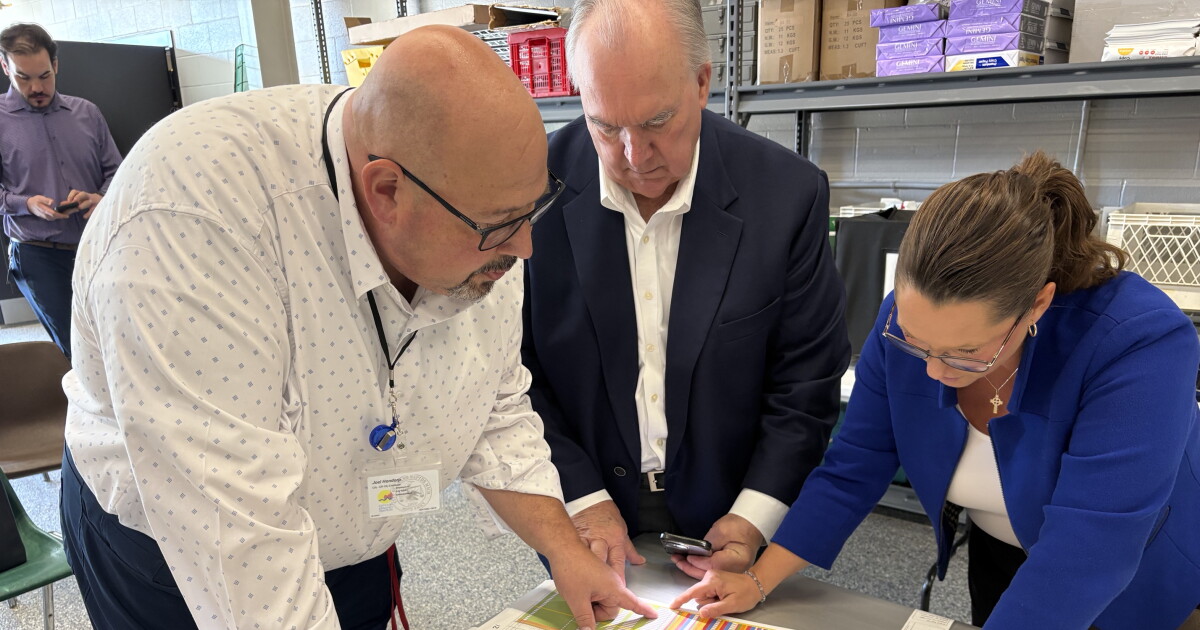
School purchasing, often seen as an administrative task, plays a pivotal role in education by influencing actual student learning. Policymakers suggest that how schools procure educational software or tutoring programs significantly impacts student outcomes. Instead of traditional purchasing, districts are adopting outcomes-based contracting, where vendor payment is tied to student achievement and service usage, encouraging both schools and vendors to ensure educational interventions work.
Outcomes-based contracts, common in healthcare, have gained traction in education since the pandemic, particularly for tutoring and educational technology. This model is now mandated in Michigan for accessing a $50 million tutoring fund and is being tested in over 20 states, including Florida, Texas, and California, as reported by the Center for Outcomes Based Contracting.
Related: Expanding Outcome-Based Payments to Educational Vendors
The first independent evaluation of outcomes-based contracts offers mixed findings. WestEd researchers evaluated programs in eight districts across California, Florida, Mississippi, and Texas from August 2024 to March 2026. Three interventions showed academic improvements, though the study stops short of attributing these gains solely to the contracts.
A significant challenge was determining if these educational interventions directly caused student learning improvements, given various influencing factors. To analyze the impact of outcomes-based contracts, WestEd compared students around an eligibility cutoff, distinguishing those who received interventions from those who did not. Of the ten planned evaluations, only four met this standard, with three showing positive results.
Interventions like an online tutoring program, planned for a full school year but lasting only two months, lacked sufficient duration for measurable gains. For six other programs, inconsistent implementation hindered proper analysis, as schools often filled tutoring slots with higher-achieving students or failed to ensure attendance.
Student performance improved in three interventions covered by outcomes-based contracts

A notable finding was AI-powered reading software for second graders, which significantly boosted state reading proficiency, unlike for older students. “That’s a really important finding,” said Brittany Miller, executive director of the Center for Outcomes Based Contracting. The mixed results highlight the need for targeted interventions tailored to specific student groups.
Outcomes-based contracts also prompted schools and vendors to focus on implementation, regularly reviewing data and student progress. However, it’s unclear if these changes were due to contract incentives or extensive support from the Center for Outcomes Based Contracting, which provided around $80,000 in coaching per district.
The center now explores cost-effective models reducing support to under $10,000 per district, hoping future evaluations will clarify if the contracts alone can drive improvements. Some districts noticed spillover effects, using data systems for other interventions not covered by the contracts.
“Certain interventions are not going to work with or without an outcomes-based contract,” said Sean Tanner, a WestEd researcher. Outcomes-based contracting creates natural experiments, helping districts learn and improve rigorously. While not a replacement for academic research, it helps schools better understand real-time intervention effectiveness.
The evaluation found no definitive cost savings from outcomes-based contracting. Despite similar spending to traditional contracts, districts sometimes incurred extra costs, and vendors occasionally lost money. The model’s success is uncertain, especially for resource-limited districts, yet it shows contracts can transform how districts manage educational programs.
—
Read More Kitchen Table News