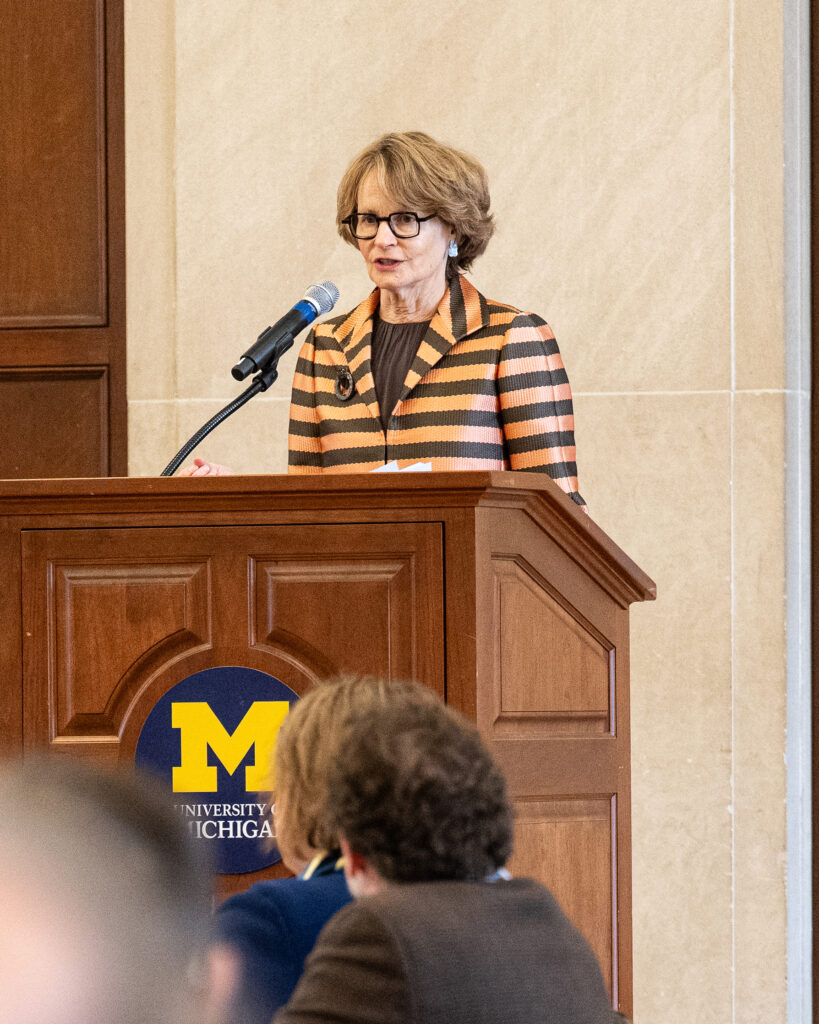
The Provost’s Seminar on Teaching recently addressed the influence of Generative AI on graduate education at the University of Michigan. The event, held on May 13 at the Michigan Union, was a collaborative effort between the Provost’s Office and the Center for Research on Learning and Teaching (CRLT). Nearly 150 faculty, staff, and academic leaders gathered to delve into the topic, focusing on its impact on graduate students. The seminar follows a previous discussion on AI in undergraduate education, aiming to explore this complex subject through the graduate students’ unique roles.

During the opening remarks, Matt Kaplan, associate vice provost and CRLT executive director, highlighted the complexity of Generative AI in graduate education, given the various roles graduate students play. Laurie McCauley, provost and executive vice president for academic affairs, asked key questions about the essence of graduate education. She emphasized the necessity of maintaining authentic human thought in the face of easy automation.
An expert panel, led by Michael Solomon, vice provost for graduate studies and dean of the Rackham Graduate School, discussed how higher education has historically adapted to significant changes. The panel featured Ann Austin from Michigan State University, John Carson and Keanu Heydari from LSA, and Nigel Melville from the Ross School of Business. They shared insights from an AI working group and examined how U-M can support its graduate students.

Austin noted that this era of higher education is “not business as usual,” drawing parallels to post-World War II transformations. She highlighted challenges such as increased skepticism and changing government relationships. Heydari shared that many students and instructors were unaware of U-M’s GenAI resources, indicating a disparity in AI preparedness.
Melville stressed the importance of an informed perspective on AI, noting that graduate students often know more about AI than professors. Carson echoed this sentiment, urging educators to value thoughtful exploration over speed. Roundtable discussions, facilitated by CRLT consultants, explored GenAI’s effects on graduate students as learners, teachers, researchers, and in creative settings.

These sessions identified opportunities and challenges, with notes shared during lunch. An interactive discussion with Dean Solomon allowed faculty to highlight roundtable insights. CRLT plans to release a video of the panel and a summary of the discussions to attendees and university leaders soon.
—
Read More Michigan News