U.S.-Iran Accord Aims to Quell Middle East Tensions and Reopen Key Oil Passage
In a significant turn of events, the United States and Iran have announced an agreement poised to end over three months of conflict in Iran and facilitate the reopening of the Strait of Hormuz. This development could mark a pivotal moment for the Middle East and the global economy.
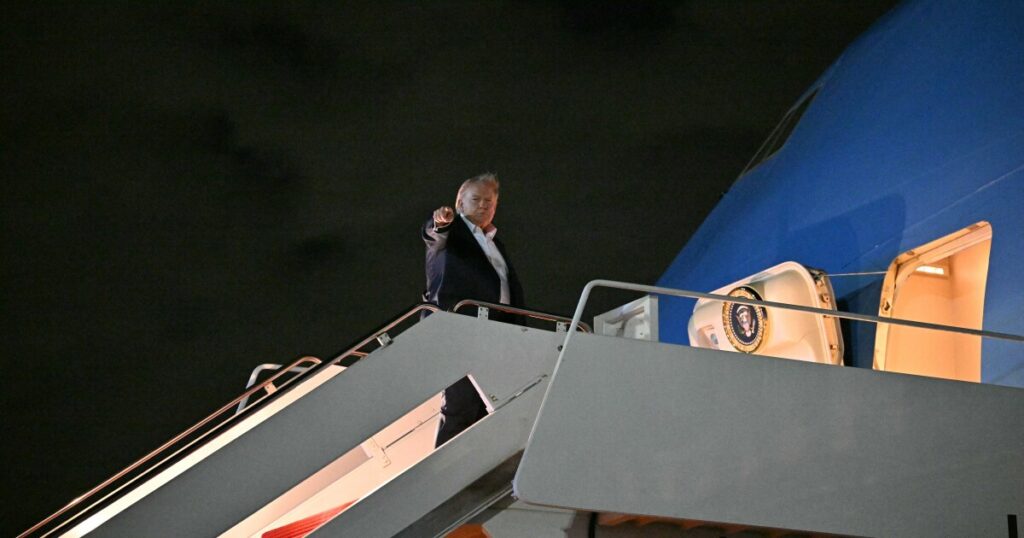
The agreement, anticipated to be officially signed in Switzerland this Friday, represents a major diplomatic success in a region that has been inflamed by conflict. “The Deal with the Islamic Republic of Iran is now complete. Congratulations to all!” President Trump announced via social media.
According to Iran’s Supreme National Security Council, the agreement was achieved after “a difficult and intensive period of negotiations lasting several months.” Immediate outcomes expected from the deal include the cessation of sporadic hostilities between the U.S. and Iran, a halt to the Israel-Hezbollah conflict in Lebanon, and the lifting of mutual blockades on the Strait of Hormuz which have significantly impacted global oil prices.
“Ships of the World, start your engines. Let the oil flow!” Trump stated emphatically in his post.
Despite this progress, the memorandum of understanding leaves several critical issues unresolved, necessitating further negotiations. The agreement extends the current ceasefire between the U.S. and Iran by 60 days. During this period, discussions will aim to achieve a permanent resolution to the conflict.
The future of Iran’s nuclear program remains a contentious topic, with its fate yet to be decided. Trump, in an interview with The New York Times, indicated that Iran might be allowed low-level nuclear enrichment, a departure from his previous stance calling for the dismantling of Iran’s nuclear capabilities.
Furthermore, Iran is seeking the unfreezing of billions of dollars in assets and the lifting of international sanctions, demands that present significant negotiation challenges. The outcome if these talks fail within the 60-day timeframe is uncertain, with Trump hinting at possible renewed military actions or taking on a protective role in the Middle East in exchange for a share of the region’s revenues, as mentioned in a conversation with The New York Times.
Signing Ceremony to Be Held in Switzerland
Pakistan’s Prime Minister Shehbaz Sharif, instrumental in mediating the negotiations, confirmed that the signing ceremony would take place on Friday. Trump’s subsequent post corroborated this.
Iran’s Deputy Foreign Minister Kazem Gharibabadi expressed Iran’s perception of the deal as a triumph, as reported by Iranian state media. Since the conflict began in late February, Iran has exerted control over the Strait of Hormuz, a critical chokepoint for global oil transport, with the U.S. responding by blockading Iranian ports.
The U.S. alleges that Iran has mined the strait, a situation Trump pledged to rectify post-signature of the agreement.
The cessation of hostilities between Israel and Hezbollah was a condition set by Iran for the agreement. However, Israeli Defense Minister Israel Katz stated that Israeli forces would remain in southern Lebanon indefinitely, despite ongoing clashes between Israel and Hezbollah.
International leaders have broadly welcomed the deal. Qatari Prime Minister Sheikh Mohammed bin Abdulrahman bin Jassim Al Thani, who assisted in mediating the agreement, called for continued “positive and constructive” talks. European leaders from the U.K., France, Germany, and Italy expressed support, emphasizing the need to swiftly reopen the Strait of Hormuz and ensure Lebanon’s stability.
French President Emmanuel Macron, in a video statement, highlighted the importance of the negotiation as G7 leaders prepared to convene in Evian. U.N. Secretary-General António Guterres described the accord as a “critical step,” encouraging all parties to strive for a lasting resolution.
Copyright 2026 NPR
—
Read More Michigan News