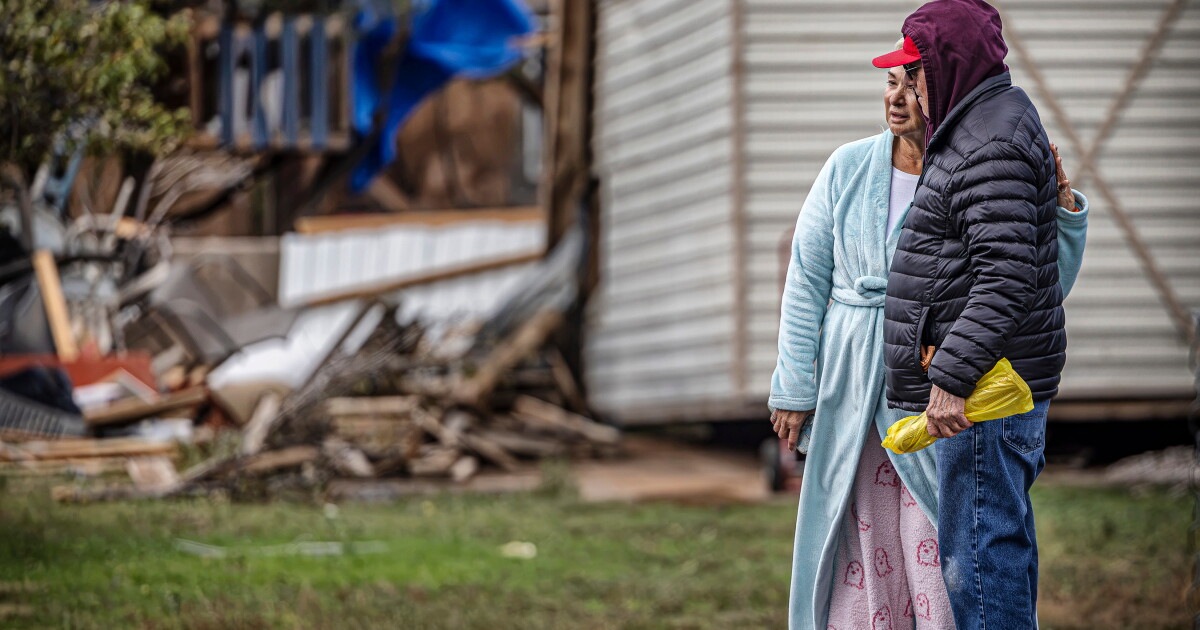
Three states this year have enacted laws that require or allow schools to use panic alarms to quickly summon emergency responders. Ten other states have such laws, and a dozen more are considering them. (Photo by Nuria Martinez-Keel/Oklahoma Voice)
This year, Illinois, Virginia, and West Virginia have introduced laws requiring or permitting schools to use panic alarms to swiftly alert emergency responders. These laws, grouped under Alyssa’s Law, bring the total to 13 states with such measures, with 10 adopting them since 2023. A dozen more states are contemplating similar legislation.
Named after Alyssa Alhadeff, a victim of the 2018 Parkland school tragedy, these initiatives are championed by Make Our Schools Safe, a nonprofit founded by her mother. Each state’s approach varies, with some mandating specific devices, while others allow schools to choose their emergency alert systems.
For instance, Texas mandates silent panic technology in classrooms, and Utah requires select staff to carry mobile alert devices. In Virginia, schools can equip employees with wearable alarms but aren’t obligated to do so. The connection methods to emergency services and funding models differ across states.
System costs vary. Gwinnett County, Georgia, allocated $7 million for CENTEGIX’s CrisisAlert system, providing staff with wearable buttons for emergency alerts. According to a CENTEGIX report, 88% of alerts in 2025-2026 were for non-emergencies like fights, while 10% involved medical issues.
National School Safety and Security Services’ Kenneth Trump argued that the prevalence of non-emergency alerts suggests that mandated panic button use may not be necessary. “Wearable incident response badges help reduce delays by enabling staff to discreetly initiate alerts from anywhere on campus,” the report states, emphasizing their communication efficiency.
This story was originally produced by Stateline, part of States Newsroom, a nonprofit news network supported by grants and a coalition of donors as a 501(c)(3) public charity.
—
Read More Montana News