Article Summary –
The Centers for Medicare and Medicaid Services (CMS) announced that the Medicare Part D Premium Stabilization Demonstration, a program providing subsidies to make prescription drugs more affordable for Medicare Part D subscribers, will end after 2026, despite arguments from various parties that its termination could lead to increased premiums for beneficiaries. While the Biden administration initiated the program, providing a subsidy and capping premium increases, the Trump administration reduced these benefits. CMS justifies the termination by stating the market has stabilized, but concerns remain about potential financial burdens on seniors, prompting Democratic members of Congress to urge a reversal of the decision.
The Centers for Medicare and Medicaid Services (CMS) announced it will conclude a program by the end of 2026 that has reduced prescription drug costs for 25 million Medicare Part D subscribers.
Started in July 2024 under President Biden, the Medicare Part D Premium Stabilization Demonstration was a voluntary initiative aimed at making prescription drugs affordable by subsidizing standalone plans. In 2025, it provided a $15 monthly subsidy and capped premium increases at $35.
Under the Trump administration in 2026, the subsidy was reduced to $10, allowing premiums to increase by up to $50.
John Brooks, deputy administrator at CMS, noted in a memo that for 2027, Part D plan sponsors have enough experience to operate under traditional market conditions, prompting the end of the demonstration program.
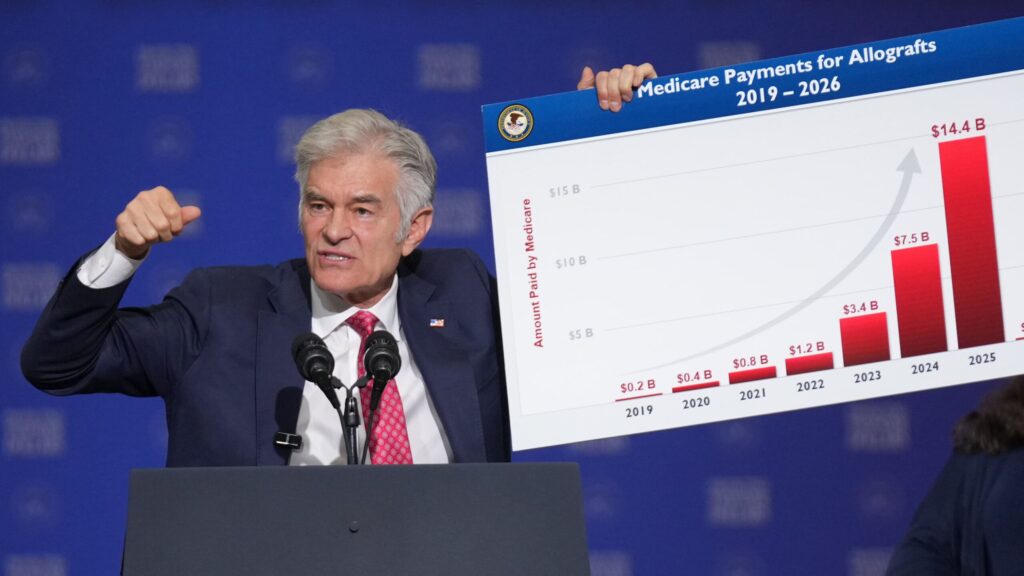
CMS administrator Mehmet Oz criticized the Biden administration on X, saying billions were given to insurance companies unnecessarily, claiming market stabilization eliminates the need for such bailouts.
A Trump administration official reported to the Wall Street Journal that 30% of Medicare Part D subscribers will see monthly increases under $10, with 45% experiencing increases between $11 and $20.
Juliette Cubanski from KFF stated that without the subsidies in 2027, some enrollees might face higher premiums, though specific amounts are not yet determined. More insights can be found here.
During his 2024 campaign, President Trump vowed to make healthcare affordable, contrasting with the current plans to end subsidies.
Leslie Dach of Protect Our Care condemned the GOP’s decision, arguing it would increase healthcare costs for seniors. More details are available in her statement.
A CMS spokesperson mentioned that the market is stabilizing post-Inflation Reduction Act, with 85% of beneficiaries able to access affordable plans next year.
On Aug. 4, 50 Democratic Congressional members urged CMS to retract the program’s termination, stressing its importance in price stabilization amidst rising costs. Their letter can be accessed here.
—
Read More Pennsylvania News