This story was produced by The Texas Tribune and republished with permission.
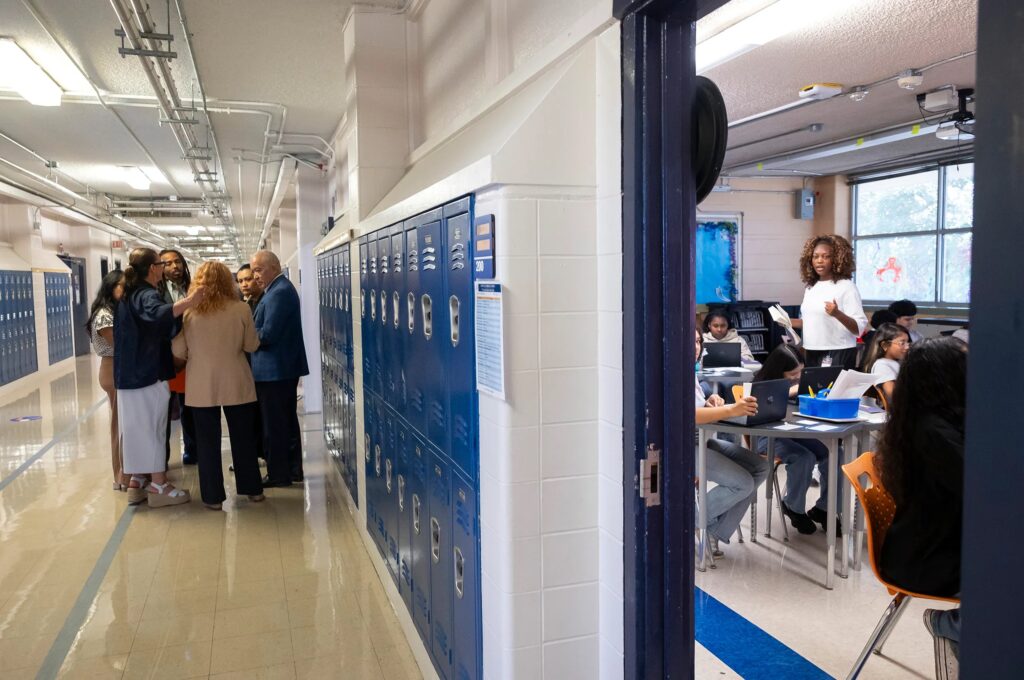
HOUSTON — Fonville Middle School adopted drastic changes to improve student performance, including hiring learning coaches and extending school days. These efforts led to an A rating from the state, marking a significant turnaround since the state took over the district, which had previously scored an F. Superintendent Mike Miles has been pivotal in this academic transformation.
Houston’s reform efforts under Miles are being lauded as a model for struggling schools nationwide. However, replicating Fonville’s success may prove costly for other districts, as nearly 20% of students have left, causing a $1 million funding loss.
Miles has invested millions in the New Education System (NES) to boost test scores, with additional support staff, increased teacher salaries, and longer school days. The NES reforms cost approximately $700,000 per school initially and $2,200 more per student annually. Yet, HISD faces a $190 million funding shortfall as enrollment declines.
Despite no extra state funding, HISD has sold properties and cut central office jobs to manage costs. Critics argue this gamble risks long-term sustainability, as highlighted by Jonathan Travers of Education Resource Strategies.
Related: State takeovers of ‘failing’ schools are increasing, with little evidence they help students
Enrollment declines have forced HISD to cut services, leading to community unrest. Voters rejected a $4.4 billion bond for infrastructure improvements, underscoring tensions. As the state plans to end the takeover, maintaining academic gains amid financial strain remains a challenge.
The financial impact extends beyond Houston, as Texas continues taking over districts due to poor performance. Experts warn that smaller districts might struggle to sustain such reforms without Houston’s resources.
Related: Do state takeovers work in Mississippi?
HISD has shed thousands of students since 2023, exacerbating financial woes. Charter schools have gained some of these students, reflecting dissatisfaction with traditional public schools. As enrollment declines, the district must adjust by consolidating campuses and reducing staff, though these actions don’t always lead to proportional savings.
Miles believes academic success will eventually bring families back. However, the challenges are steep, as illustrated by families like the Holmes, who moved away due to the district’s focus on testing.
As HISD spends millions on NES, the superintendent has to balance ambitious reforms with budget constraints. There’s a call for more state funding to support these efforts, as community groups argue the state should invest in its educational experiments.
The state views HISD’s success as a model, with former district leaders now spearheading reforms in other districts. Yet, financial experts caution that without Houston’s scale, other districts may have to cut services sooner, risking the sustainability of these reforms.
Related: Four takeaways from our investigation into Texas discipline schools
—
Read More Kitchen Table News