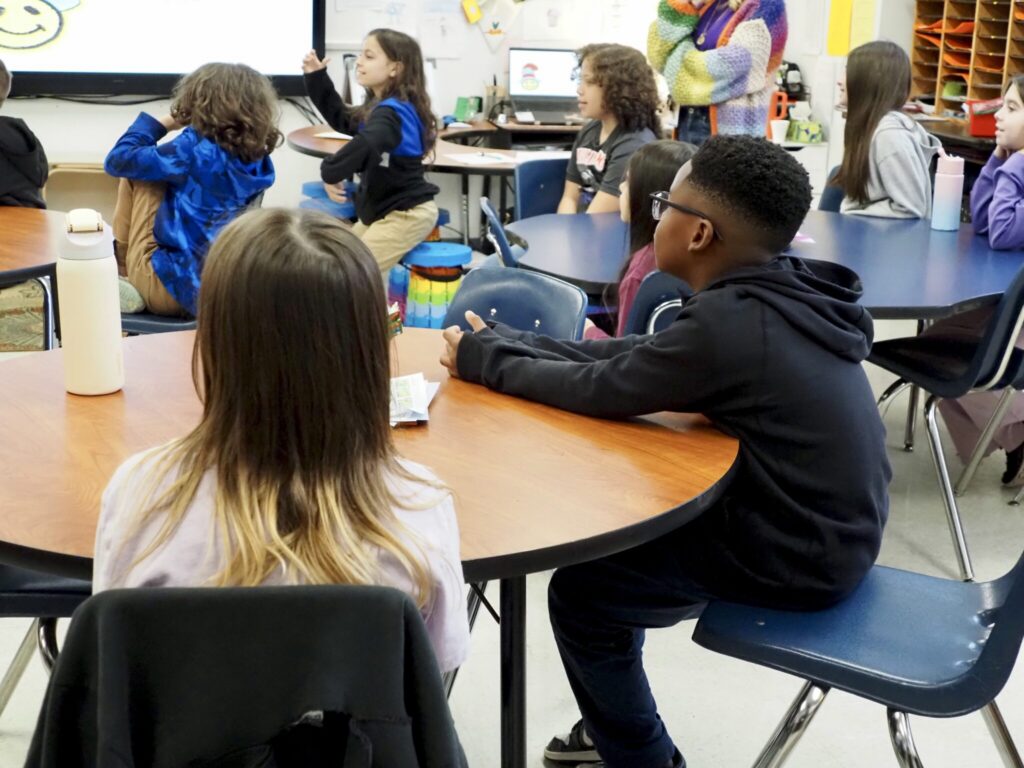
In November 2022, ChatGPT emerged as a pivotal technology, influencing Keon Davis, a University of Wisconsin-Madison junior. As a marketing student, he relied on it for tasks like email outreach and consumer research. However, witnessing its capability to automate roles made him reconsider his career path. By May 2024, Davis opted for Teach for America instead of pursuing marketing jobs, now teaching third grade at a New York City charter school.
Davis finds fulfillment in teaching, emphasizing the importance of connecting with students, which he believes is irreplaceable by AI. “Stuff like that cannot be automated,” he noted. As AI reshapes white-collar jobs, many young professionals are re-evaluating their careers, gravitating towards hands-on trades such as electrical work or people-centric fields like nursing or teaching.
Current research on AI’s impact on career shifts is limited, but a Pew Research Center survey shows 73% of adults under 30 fear AI will reduce job opportunities, a notable increase from 61% two years ago. From November 2022 to June 2026, employment among 22 to 25-year-olds in AI-exposed roles like customer service dropped 19% compared to less-exposed fields like nursing.
Enrollment trends reflect these concerns. Computer science programs see declining numbers, while health professions rise, per the National Student Clearinghouse. Teaching applications, notably at Teach for America, surged by 43% between 2022 and 2025. Meanwhile, technical apprenticeships for those under 24 rose 20% from 2022 to 2024, driven by demand for skilled labor in trades like electrical work and automotive technology.
Trade schools and apprenticeship promoters argue these roles are “AI-proof” and essential as older workers retire. The U.S. Bureau of Labor Statistics reports significant job growth in areas such as electrical work and HVAC mechanics. Rosedale Technical College in Pittsburgh saw a 50% enrollment increase, with many students from white-collar backgrounds concerned about AI’s impact on their careers.
Kevin Brough, a former software developer, turned to automotive technology training after being laid off. He believes manual tasks like those in automotive repair are less likely to be automated soon. Similarly, Meagan Acevedo, a former retail worker, entered an electrical apprenticeship to secure a more stable future, despite the job’s physical demands.
These career shifts highlight a challenge for educational institutions to adapt. Some universities, like Purdue, now require AI competency in their curricula. Others offer AI-integrated programs to prepare students for a tech-driven job market. However, government support for AI-related retraining remains limited, with proposals for federal assistance yet to be enacted.
Absent broader initiatives, workers independently navigate career changes, aiming for stability in a rapidly evolving job landscape.
Contact editor Caroline Preston at 212-870-8965, via Signal at CarolineP.83 or on email at preston@hechingerreport.org.
This article on AI-proof careers was produced by The Hechinger Report, a nonprofit, independent news organization focused on inequality and innovation in education. Sign up for our higher education newsletter.
—
Read More Kitchen Table News