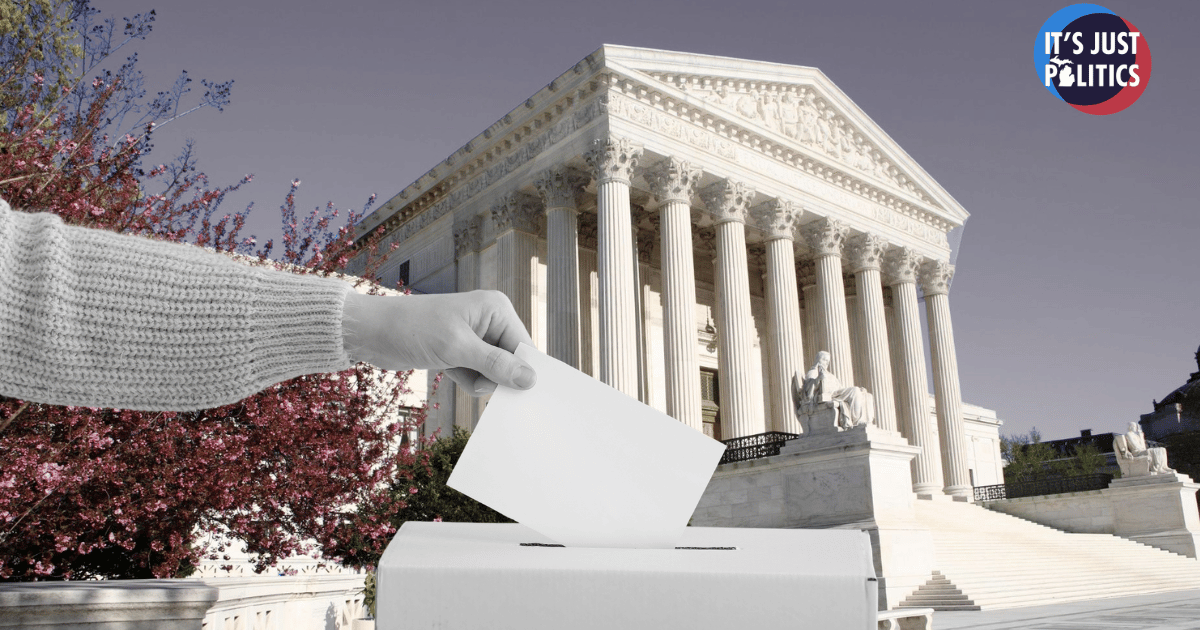
Recent maneuvers by the Republican Party to influence the congressional map ahead of the 2026 elections have sparked concerns about voting rights and representation across the United States.
Reports suggest that the White House has engaged with lawmakers in several key states, including Texas, Ohio, Florida, and Indiana, to redraw congressional district boundaries in a manner that could potentially weaken Democratic voting power. This strategy aims to bolster Republican control in the House of Representatives.
“This is a five-alarm fire for voting rights and democracy across the entire country,” stated Rep. Greg Casar (D-TX) in an interview with The Nation. “In my view, this is the biggest threat to our democracy right now that nobody’s talking about.”
In Texas, a special legislative session has been called by Republicans to initiate the redistricting process. The objective is to secure an additional five Republican seats in the U.S. House. One proposed map controversially merges Lubbock and San Antonio into the same district, though they are separated by 350 miles.
Democratic legislators in Texas are contemplating leaving the state to prevent a quorum, a move that would hinder legislative progress. However, state law imposes a $500 daily fine on absent Democrats, which cannot be covered with campaign funds.
Efforts are underway by the House Majority PAC and the National Democratic Redistricting Committee (NDRC) to mobilize Texas voters against the proposed gerrymandering. The NDRC’s president, John Bisognano, emphasized, “Right now, we have the fairest national congressional map this country has seen since its inception, and it’s a map that allows both parties to compete for the House majority.” He warned that pursuing Trump’s redistricting plan would trigger a surge of lawsuits aimed at protecting Texans’ rights.
Ohio is also on course to redraw its congressional districts this year, with Republicans aiming to gain one to three seats. The state currently has 15 districts, five of which are Democrat-held. Sen. Bernie Moreno (R-OH) expressed to Punchbowl News his desire to reduce Democratic representation to three seats, which would give Republicans 80% of the House seats in a state where Trump garnered 55% of the vote.
The redistricting process could also be used to strengthen support for GOP Representatives Mike Turner and Mike Carey, both targeted by the Democratic Congressional Campaign Committee for the upcoming elections.
With control over the legislature and governor’s office, Ohio Republicans leave Democrats with limited options to contest the redistricting.
Florida traditionally redraws its congressional maps every decade following the census. The next scheduled redrawing is set for 2030, with new maps to take effect in 2032. However, Governor Ron DeSantis has suggested a mid-decade redistricting, stating it “would be appropriate” and that plans are being developed to implement this change.
DeSantis oversaw the creation of the 2022 map, which removed a majority-Black district and added four Republican seats in Congress. Although legally contested, the map was recently upheld by the Florida Supreme Court’s conservative majority.
Florida Democratic Party Chair Nikki Fried criticized the move as “nothing more than a desperate attempt to rig the system and silence voters before the 2026 election.”
The White House is reportedly advising Indiana to convene a special session for redistricting, with a view to gaining one to two additional House seats. It remains uncertain whether Governor Mike Braun will act on this suggestion.
—
Read More Kitchen Table News