As the threat of wildfires escalates with rising temperatures and decreasing snowpacks, technological innovations are becoming crucial tools in firefighting. In Arizona’s Coconino National Forest, artificial intelligence (AI) is helping to detect fires early, preventing them from escalating into large-scale disasters.
Recently, an AI camera flagged potential smoke, prompting verification by human analysts. This swift action helped contain what became known as the Diamond Fire to just 7 acres, showcasing the effectiveness of AI in early fire detection.
AI Cameras: An Essential Tool in Fire Detection
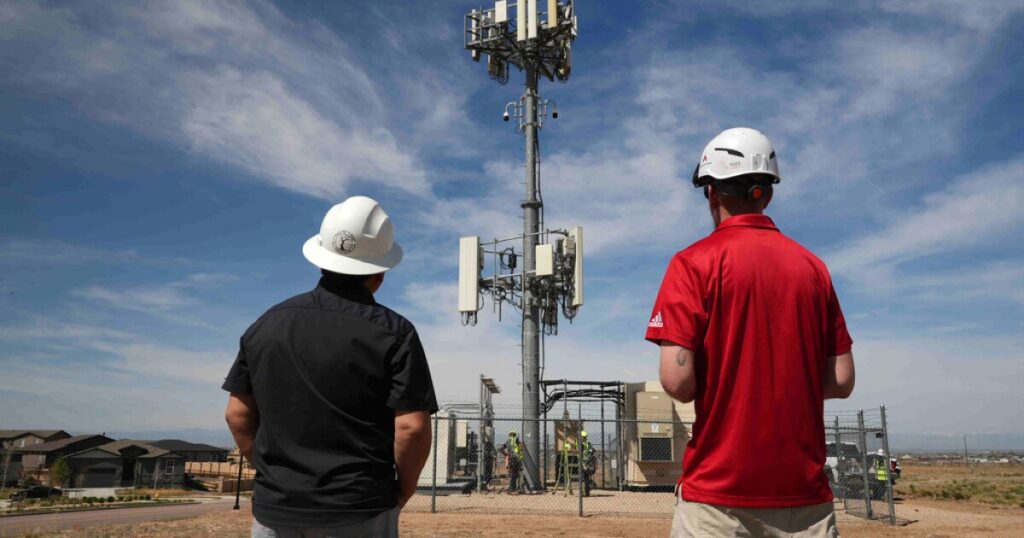
With the increasing severity of wildfires, western states like Arizona and California are enhancing their prevention strategies by deploying AI technology. Arizona Public Service has already installed nearly 40 AI cameras, with plans to expand to 71, while Colorado’s Xcel Energy has set up 126 cameras across several states.
“Earlier detection means we can launch aircraft and personnel to it and keep those fires as small as we can,” stated John Truett from the Arizona Department of Forestry and Fire Management.
Reducing False Positives with Human Oversight
California’s ALERTCalifornia, a network of 1,240 AI-equipped cameras, operates on a similar principle. Neal Driscoll from the University of California, San Diego, noted that human oversight minimizes false alarms and enhances AI accuracy. “The AI that’s being run on the cameras is actually beating 911 calls,” he said.
AI is particularly beneficial in remote areas where fires might otherwise go unnoticed for extended periods. “In many cases, we’ve started a response before 911 was even called,” added Brent Pascua from Cal Fire.
Expanding AI’s Role in Fire Management
Pano AI, leveraging a combination of high-definition cameras, satellite data, and AI, is gaining traction. Their technology, used in Australia, Canada, and 17 U.S. states, detected 725 wildfires in the U.S. last year. Arvind Satyam, Pano AI’s co-founder, emphasized the advantage of early detection in preventing fires from spreading.
Arizona Public Service meteorologist Cindy Kobold noted that AI alerts them about 45 minutes sooner than 911 calls. However, cost and false alarms remain challenges, with Pano AI charging approximately $50,000 annually per camera.
Integrating AI with Human Decision-Making
Despite its capabilities, AI cannot independently determine the optimal response to detected fires. Patrick Roberts from RAND highlighted the necessity of human decision-making to complement AI’s findings. In populated regions, human observation often suffices, but AI aids in less accessible areas.
Brent Pascua acknowledged, “AI can only do so much. It just provides that real-time information where we can make better decisions on the fire ground.”
Beyond Detection: AI’s Expanding Frontier
AI is also being explored for other applications like optimizing vegetation management and monitoring air quality. Researchers, including those at George Mason University, are developing systems to predict fire paths and smoke impacts, aiming for implementation within three years.
As Patrick Roberts pointed out, “AI in wildfires, it’s no longer just speculative. It’s really being used.” The integration of AI in fire management is expected to grow, blurring the lines between technology and traditional methods.
—
Read More Arizona News