Despite fears over artificial intelligence and significant tech layoffs, Matt Walsh struggles to recruit specific talents for tech companies. His Phoenix-based firm, Blue Signal, specializes in such hiring and highlights a severe worker shortage, especially in semiconductor production.
College graduates express dismay over AI’s impact on entry-level jobs, as seen in Meta’s layoff of over 8,000 employees. However, economists warn the AI focus overshadows a looming worker shortage crisis in the U.S., the largest in history, which could critically affect the economy.
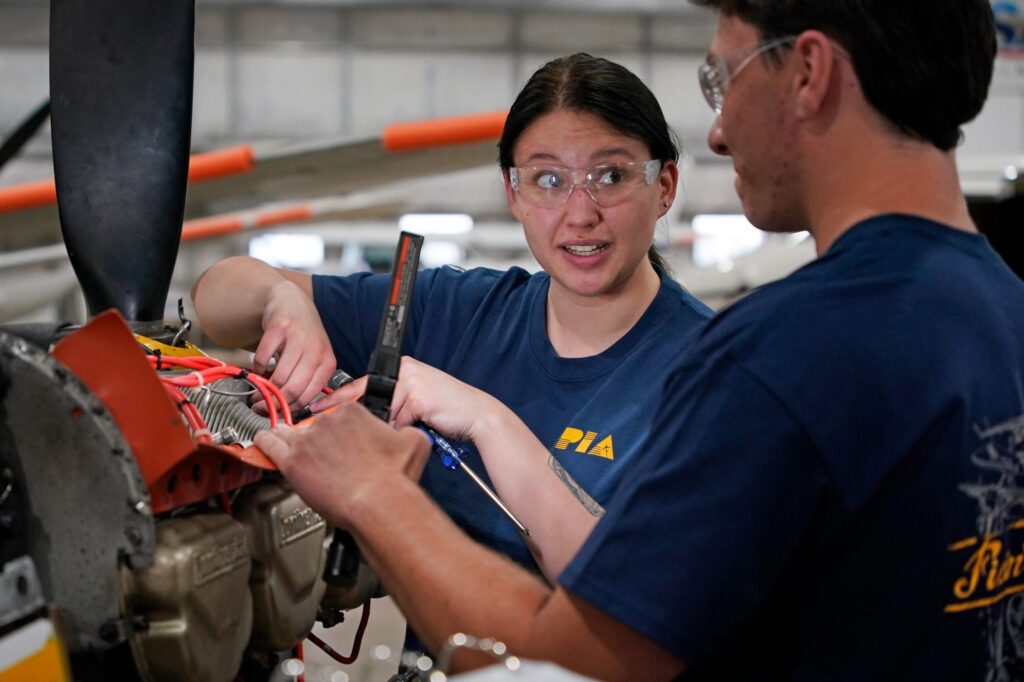
A shortage of workers in fields AI cannot replace, such as nursing, teaching, engineering, and construction, is anticipated. According to Georgetown University Center on Education and the Workforce, this issue could “hobble the American economy.”
Ron Hetrick from Lightcast underscores the societal need for roles currently undersupplied. Trends leading to this shortage include a misalignment between graduates’ career choices and workforce needs, as significantly fewer students pursue healthcare careers than required.
A decline in birthrates and a surge of retirements coincide with fewer college-educated workers entering the labor force, widening the gap in available skilled professionals. By 2032, a deficit of up to 6 million workers is predicted, impeding sectors crucial for national security and economic growth.
Industries like the semiconductor sector are expanding faster than the workforce can support. The U.S. Chamber of Commerce reports ongoing shortages across various fields, predicting long-term impacts on production and innovation.
State governments are responding by offering incentives like student loan assistance to retain talent. Efforts to combine higher education and workforce development initiatives are underway in states such as Missouri and Colorado.
A stark contrast exists between supply and demand in construction trades, with fewer entrants than needed, despite high starting wages. Addressing these shortages involves adapting educational systems to better meet market demands.
Seth Russell, bypassing college, found success in welding, illustrating alternative pathways to lucrative careers without accruing college debt. This highlights the potential for young workers to fill gaps in high-demand skilled trades.
—
Read More Kitchen Table News