Canadian Wildfire Smoke Inflicts Over $38 Billion in Economic Losses Across U.S. States
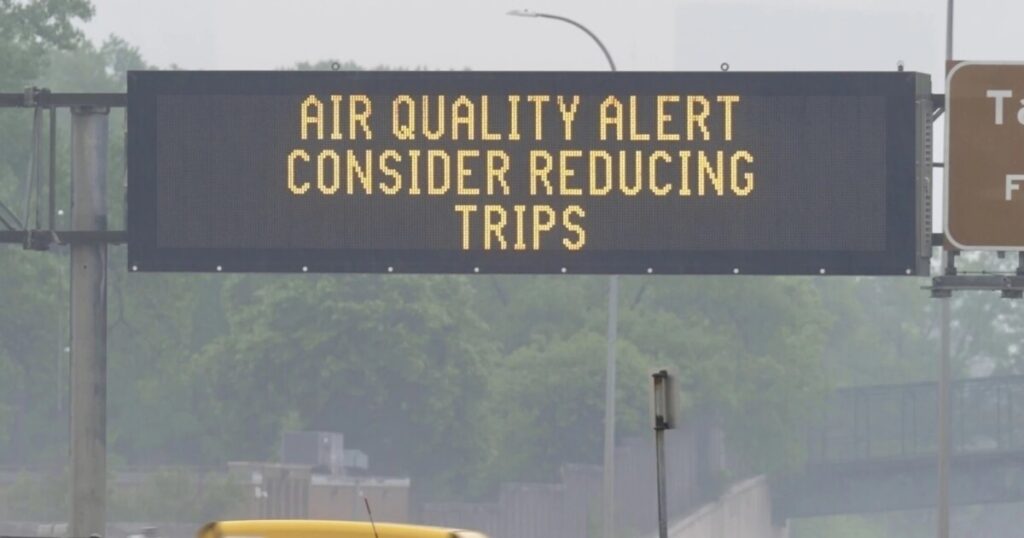
This summer, the relentless haze from Canadian wildfires cast a significant economic shadow across the United States, resulting in damages surpassing $38 billion. The findings, unveiled by economist Richard Melstrom in a study for the Anderson Economic Group, emphasize the financial toll of the widespread smoke.
Spanning 10 states, the economic impact was felt most heavily in regions such as Illinois, Indiana, Maryland, Michigan, Minnesota, New Jersey, New York, Ohio, Pennsylvania, and Wisconsin. The study’s comprehensive analysis covers the full duration of the smoke’s presence in these areas.
The Anderson Economic Group, a consulting firm headquartered in Michigan, focuses on public policy, business valuation, and market and industry analysis. According to Melstrom, Michigan suffered the highest economic losses among the affected states, with damages exceeding $6.6 billion.
“The smoke was dense, and it settled over the state longer,” Melstrom explained, “so the impact was correspondingly higher.”
Experts highlight that particulate matter from wildfire smoke poses significant health risks, particularly for vulnerable groups such as children, individuals with asthma and cardiovascular conditions, and the elderly. Even healthy young people engaging in outdoor activities and those working outdoors may face health dangers.
Melstrom noted that wildfire smoke events disrupt economic activities by causing illness-related work absences, reducing earnings and productivity, leading to business closures, and resulting in event cancellations.
—
Read More Michigan News