Challenges Intensify for DACA Recipients Amid Policy Changes and Delays
With the Deferred Action for Childhood Arrivals (DACA) program marking its 14th anniversary, the landscape for undocumented immigrants brought to the U.S. as children is fraught with uncertainty. Initially designed to offer work permits and temporary deportation relief, the program’s efficacy has been undermined by significant challenges under the Trump administration, as noted by community advocates.
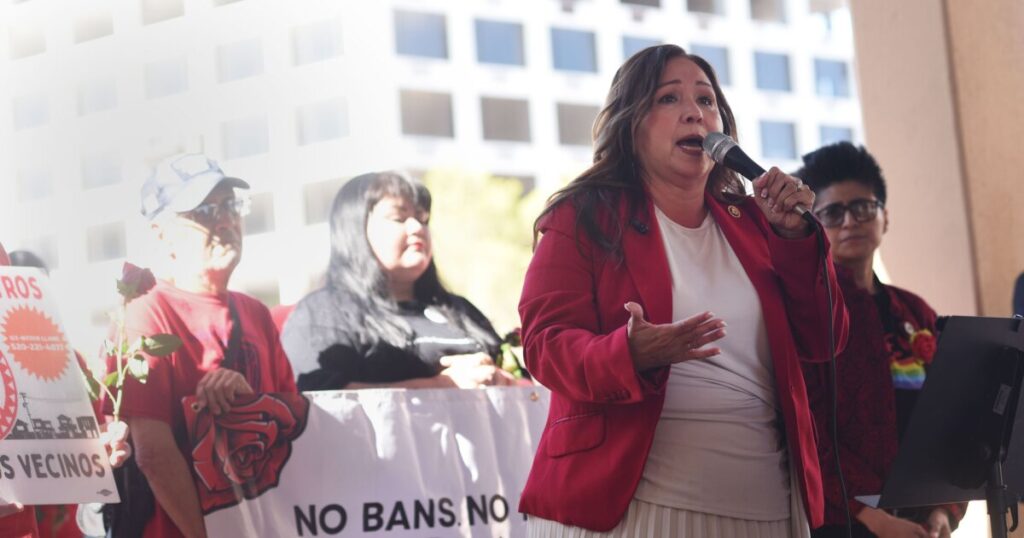
On a recent Tuesday morning, Tucson’s downtown streets became a platform for the voices of activists and lawmakers during Rally de Las Rosas. Organized by the veteran group Common Defense, the event spotlighted the experiences of DACA recipients facing scrutiny from Immigration and Customs Enforcement (ICE).
Southern Arizona Congresswoman Adelita Grijalva emphasized the compliance of DACA recipients with program requirements, stating, “Since the opportunity came about, they have paid their taxes, they have passed their background checks, they have renewed their status, every single time.” Despite their efforts, many now find themselves in a precarious position.
Many DACA recipients now face processing delays that extend their vulnerability, with renewals required biannually. Even those maintaining active status aren’t immune to these challenges.
Karla Toledo, a 31-year-old brought from Mexico as an infant, shared her ordeal. Despite a clean record, she was forcibly detained by ICE agents, illustrating the uncertainty recipients endure. Tearfully, she affirmed her belonging in the U.S., stating, “Home is here. Home is here for Mindy, home is here for Roberto, Home is here for me.”

Toledo’s release did not eliminate her legal challenges, as her deportation case remains pending for a March court date. Meanwhile, the DACA program continues to navigate legal hurdles, with a 2020 Supreme Court decision upholding it, yet barring new applications due to ongoing litigation.
Roberto Navarro, a mechanical engineering student at the University of Arizona, applied for DACA in 2020 after the Supreme Court upheld the program. However, his application remains in limbo following legal actions by Texas and other GOP-led states. Navarro expressed concern about his future, stating, “I am undocumented, so when I graduate, I can’t work legally … there’s so many things I want to do, but at the same time, they require a Social Security number.”
His attorney, Mo Goldman, highlighted the paradox of Navarro’s situation: attempting to gain legal status through his U.S. citizen wife, only to face deportation proceedings. “Imagine that, he tried to do it the right way, and our government turned around and said no, we’re not going to let you do that, we’re going to try and deport you,” Goldman remarked.

In 2025, ICE reported the arrest of 260 DACA recipients, with 174 facing deportation. Data repeatedly indicate that a majority of those detained under the Trump administration lacked criminal convictions.
—
Read More Arizona News