Unprecedented Water Cuts Proposed for Key Western States
Amid ongoing drought and climate change, the federal government has introduced a plan that could lead to unprecedented reductions in Colorado River water supplies for Arizona, California, and Nevada. This proposal, described in a recent study by water experts, suggests that these states could face annual cuts of about 40% from 2028 to 2036, with Arizona likely bearing the brunt.
Historically low water levels in the Colorado River, coupled with an inability of the seven reliant Western states to reach a consensus on water usage reductions, have prompted federal intervention. The study underscores that the proposed cuts have “no historical analogy,” emphasizing the potential economic repercussions.
Arizona has expressed concerns, negotiating a temporary reduction to 20% for 2026 and 2027, but remains apprehensive about the long-term impacts. Leaders worry these drastic cuts could have “draconian” effects on the state’s economy and its residents.
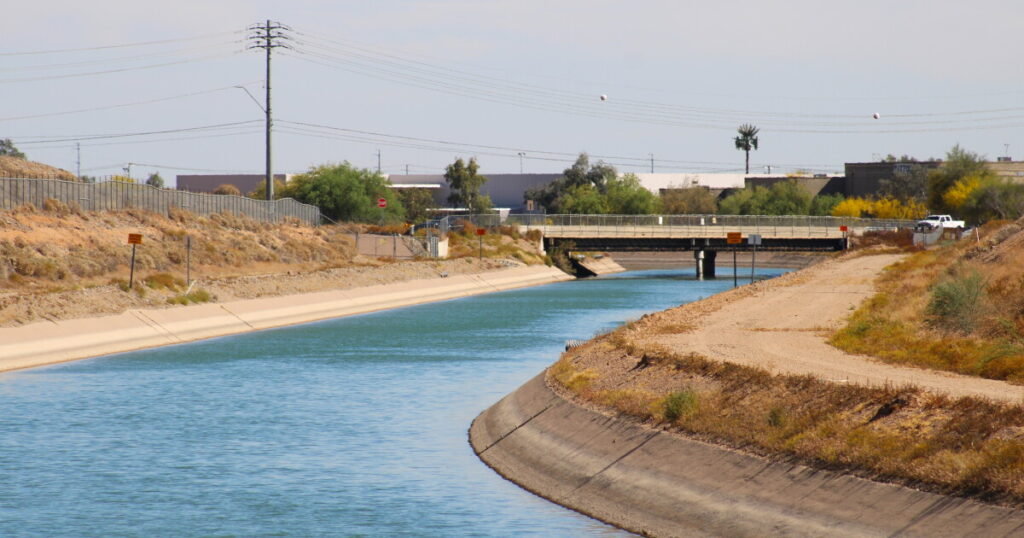
A federal plan for the Colorado River means big water cuts for Arizona. The Phoenix and Tucson areas will be hit hard. City leaders say they can keep taps flowing, but solutions will be expensive.
This perspective is supported by a group of regional experts, informally named the “Traveling Wilburys” of the Colorado River, who have released a report highlighting the implications of such unprecedented cuts.
Jack Schmidt, a co-author of the report, noted, “To achieve those kind of cuts would be completely unprecedented in the Lower Basin. We’re not arguing that it should or shouldn’t be, but we’re saying — don’t kid yourself, those are unprecedented numbers, and the economic impacts of implementing those kind of very large numbers, for which there’s no historical analogy, would be very serious issues.”
Schmidt suggests that the massive cuts should be distributed more evenly across other states, noting the Upper Basin states like Colorado, Utah, Wyoming, and New Mexico are not subject to mandatory reductions under the current plan. “There’s no way you can ask the Lower Basin to make those magnitude cuts and not ask the Upper Basin to do anything,” he said.
The report indicates that the proposed water reductions, if implemented, would force the Lower Basin states to operate at water use levels unseen since 1935. It proposes that there may be areas, such as the Imperial Irrigation District in California, where water usage could be reduced without significantly impacting essential agricultural output.

The study further notes that while the Central Arizona Project (CAP) has significantly reduced its water usage in recent years, other Colorado River users in Arizona have not followed suit proportionately. “You’re going to have to find a way in Arizona to reduce the sum of those other users,” Schmidt explained. “You can’t have a system where all the cuts are being taken by CAP and the other users’ line just sort of stays flat.”
For a more comprehensive understanding, the full report can be accessed here [PDF].
—
Read More Arizona News