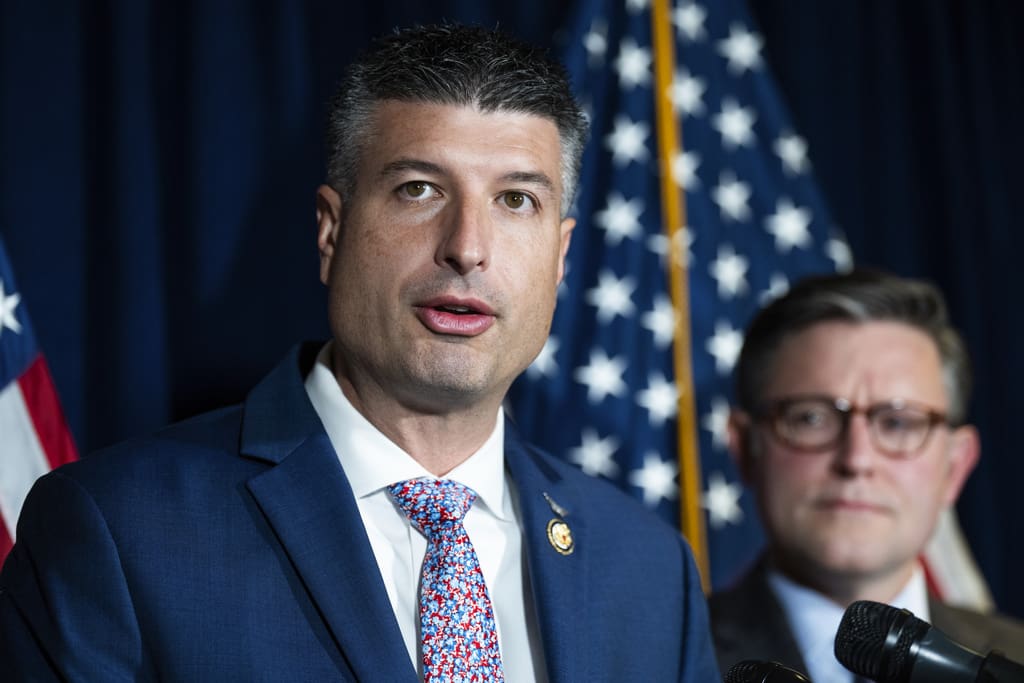
Michigan Rep. Tom Barrett’s Funding and the Impacts of the One Big Beautiful Bill Act
During the congressional discussions surrounding the One Big Beautiful Bill Act (OBBB), Michigan Representative Tom Barrett received significant financial contributions from billionaires and corporations that later gained from the bill’s enactment.
Barrett, representing Michigan’s 7th District, which includes Lansing, is viewed as one of the most at-risk House Republicans in the upcoming election cycle, according to political analysis.
From March to June 2025, Barrett accepted close to $50,000 from eight billionaires. This includes $7,000 each from MAGA supporters Richard Uhelin and Jeffrey Yass, and another $7,000 from real estate heir Ross Perot Jr.
In addition, Barrett secured $17,500 from executives in the oil and gas sector, representing companies like Chief Oil and Gas, Sable Permian, and Arrington Oil and Gas. He also received $2,000 from the political action committee of Koch, Inc., an energy manufacturer.
The OBBB facilitated tax reductions for large corporations and wealthy individuals. These financial alleviations were supported by cuts to Medicaid and other public services. Consequently, over 13,000 of Barrett’s constituents are predicted to lose their health insurance coverage.
Despite these outcomes, Barrett has praised the legislation as a “significant win”. In an interview with WILX News last August, he expressed pride in advocating for the benefits of the bill.
The OBBB also scaled back clean energy programs established during the Biden administration, eliminating incentives for solar and wind energy and facilitating increased oil and gas drilling across the U.S.
Mike Sommers, president of the American Petroleum Institute, stated to CNBC before the bill’s passage, “This bill will be the most transformational legislation that we’ve seen in decades in terms of access to both federal lands and federal waters. It includes almost all of our priorities.”
The benefits to the oil industry may lead to increased utility costs for households. The OBBB also supports the development of new AI data centers, potentially exacerbating demands on local power infrastructure and increasing energy expenses.
A projection by Energy Innovation, a nonpartisan energy policy think tank, indicates that Michigan households could experience a $473 rise in annual utility bills by 2035 due to the OBBB.
Barrett’s history includes previous criticisms for his alignment with special interest groups. During his tenure in the Michigan Senate from 2019 to 2023, he twice voted to maintain tax credits for car insurers, subsequently receiving $5,000 from the car insurance industry.
In 2018, Barrett supported legislation to restrict the state’s paid leave policy and delay a minimum wage hike, receiving nearly $197,000 from PACs opposing these policies.
The Democratic contender against Barrett will be determined in the August 4 primary.
—
Read More Kitchen Table News