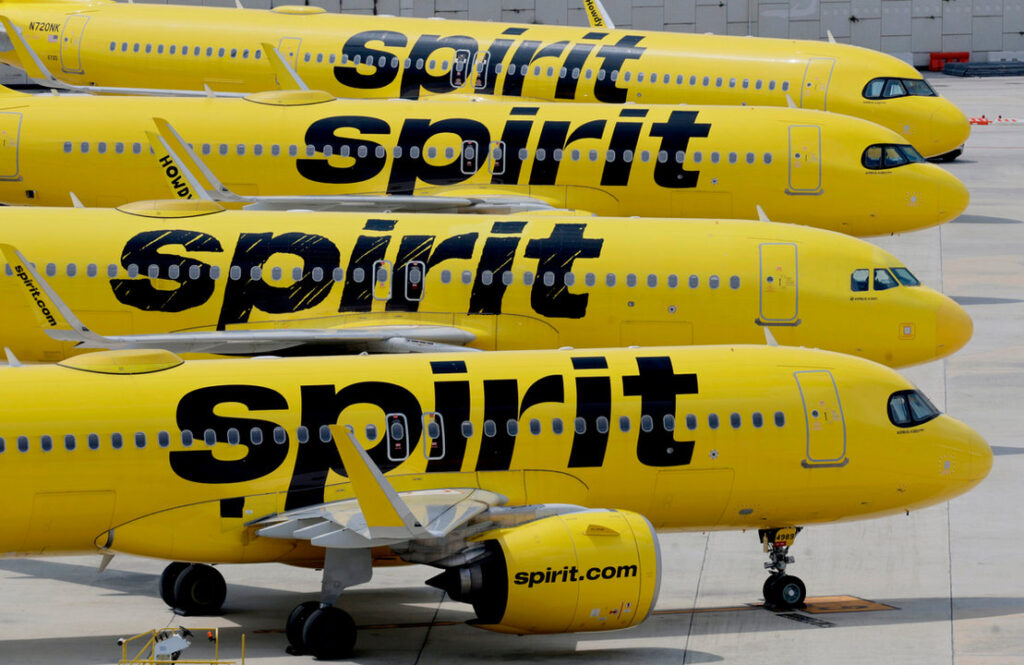
In a sudden turn of events, Spirit Airlines, once a favorite among frugal travelers for its no-frills, low-cost flights, has ceased its operations after 34 years. The closure leaves behind a legacy of affordable air travel, as well as thousands of stranded passengers and employees facing uncertainty.
The airline announced on Friday that it has initiated an “orderly wind-down” of its business, leading to immediate cancellation of all flights. This closure jeopardizes approximately 17,000 jobs as Spirit ends its chapter as a major facilitator of cost-effective domestic travel.
Rising fuel costs appear to have been the final nail in the coffin for Spirit. The airline was hit hard by soaring jet fuel prices, resulting from geopolitical tensions, specifically Trump’s aggressive policies toward Iran and the subsequent disruption of the Strait of Hormuz. The airline’s CFO, Fred Cromer, reported that in just March and April, Spirit accumulated an additional $100 million in fuel expenses, severely impacting its financial health.
Efforts by the Trump administration to keep Spirit afloat included a proposed $500 million aid package; however, negotiations for the government-backed takeover fell through amidst opposition from creditors and some congressional members. Cromer stated in a court document that they were informed last week that the support was no longer an option.
Commenting on the situation, Cato Institute’s policy analyst Tad DeHaven called the situation “a compounding effect in terms of policy,” pointing to foreign policy missteps as a precursor to the rising costs and eventual shutdown.
The end of operations was carefully timed. By 3 a.m. Saturday, the airline had grounded its fleet to prevent any aircraft from being mid-route. The last journey ended at Dallas Fort Worth International Airport, arriving from Detroit.
Passengers, like Taylor Nantang who traveled from Tennessee to Atlanta expecting a family trip to Miami, were caught off guard at the airports; flight boards still displayed Spirit flights as on time, creating confusion and frustration among travelers who arrived to find their plans upended.
Joshua Sigler, another passenger planning to fly to Miami, remarked on Spirit’s affordability: “They get you there. It was cheap.” However, like many others, he received no communication about the shutdown before reaching the airport.
For employees, the shutdown was equally surprising. Freddy Peterson, a Spirit flight attendant, discovered the news online after his last flight landed, learning all flights had been canceled. Delta Air Lines kindly arranged for him and fellow crew members to return home.
Despite Spirit’s chaotic final days, many former employees, like Peterson, have expressed gratitude for the opportunities the airline provided. Yet, criticism has been directed at management, especially for canceling an employee town hall intended to discuss the company’s future.
Secretary Duffy assured that Spirit has funds reserved for direct ticket refunds, although customers who booked through third-party services must seek refunds through those channels. Airlines such as United, Delta, JetBlue, and Southwest stepped in, offering $200 flights for displaced Spirt customers, with several providing job opportunities for former Spirit employees.
As a further step, Spirit’s existing resources, including aircraft and engines, are to be sold off as part of the liquidation process, for which the company will temporarily retain a small workforce.
In its final statement, Spirit reflected on its influence: “We are proud of the impact of our ultra-low-cost model on the industry over the last 34 years and had hoped to serve our guests for many years to come.”
The exit of Spirit Airlines is expected to primarily affect passengers in markets such as Las Vegas and Florida, where the airline’s presence helped keep airfares competitive. The result may be fewer choices and increased prices for consumers, echoing warnings from labor unions about the potential fallout.